- Home
-
How To Make Your Own Adjustable Standing Desk?
Views: 0 Author: Site Editor Publish Time: 2025-01-17 Origin: Site


Prolonged sitting at a desk has become a common problem in modern workplaces, often referred to as an "invisible health killer." To address this issue, adjustable desks have emerged. Adjustable desks support alternating between sitting and standing, helping to improve blood circulation, relieve muscle fatigue, and reduce the risk of occupational diseases. Adjustable desks embody a people-centered philosophy, aligning with contemporary office concepts that highly value health management and ergonomics, and have become an important choice for many companies upgrading their office environments.
The JIECANG brand offers a wide range of adjustable desk design concepts. By reviewing these designs, you are sure to find inspiration. This article aims to provide you with some basic ideas and methods for building your own adjustable desk.
How to make your own adjustable standing desk?
Compared to buying a ready-made product, some users prefer to build their own adjustable office desk through DIY methods to reduce costs and meet their personalized needs. If you want to build your own adjustable office desk, you need to follow these steps.
I. Before beginning the production process, the specific requirements should be clearly defined.
First, you need to determine the adjustment range of the desk. The common sitting height is approximately 70–75 centimeters, and the standing height is approximately 100–115 centimeters. Secondly, you need to consider the weight capacity of the desktop, the use of electrical appliances, and the available space, as these will all affect the overall structural design.
2. Clearly state whether you want to build a manually adjustable or automatically adjustable office desk.
Manually adjustable desks have a relatively simple structure and are suitable for beginners to DIY. While automatically adjustable desks offer a better working experience, they are more complex to build. You can choose based on your skill level and needs. Today, we'll be recommending a method for building a manually adjustable standing desk.
3 .Required materials
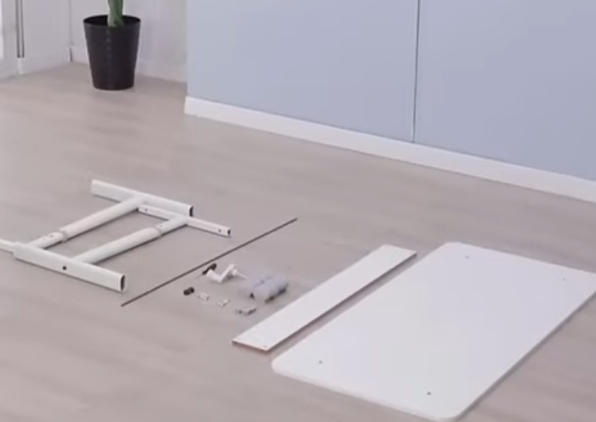
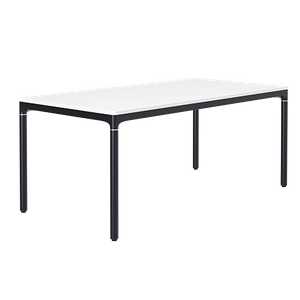
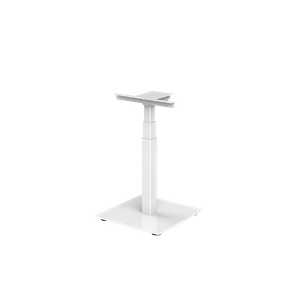
Before we can build our adjustable standing desk, we need to gather the necessary materials, as shown in the picture.
We will need a solid wood or plywood tabletop; adjustable metal table legs and leg sleeves; parts such as screws, nuts, and protective corner covers; a lifting handle and metal rods; and tools such as screwdrivers, sanders, etc.
4 . Production Steps
Once the necessary components are prepared, we can begin the actual DIY process. The steps are as follows:
1. Cut the tabletop to the desired size and sand the edges.
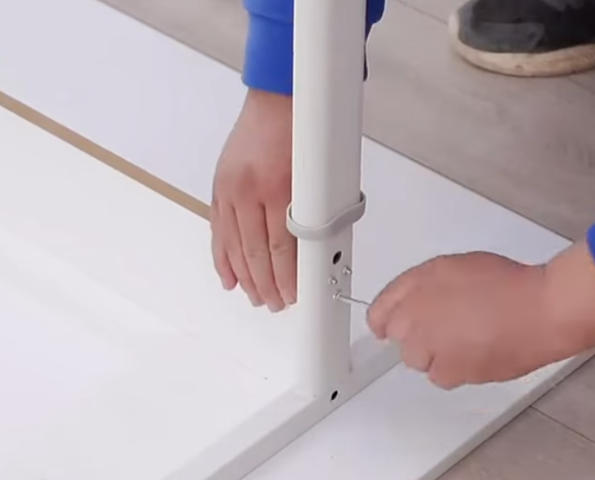
2. Position the table legs perpendicular to the tabletop, aligning the legs with the pre-drilled holes on the underside of the tabletop, and secure them with screws to create a stable base for the adjustable desk.
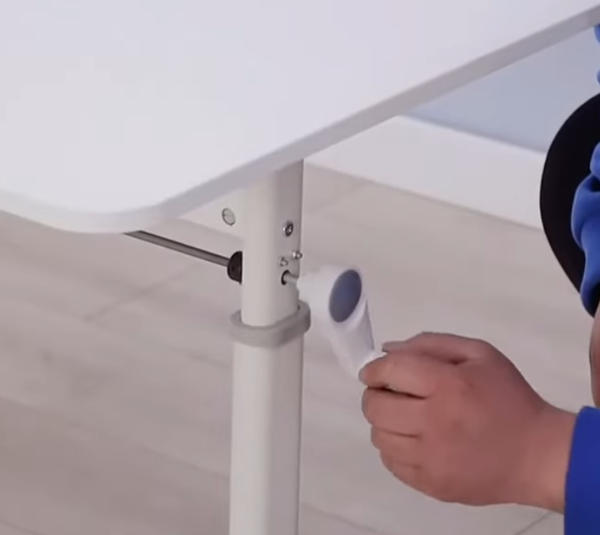
3. Insert the black plastic pieces onto the metal rods, thread them through the holes in the table legs, and attach the height adjustment handle. This handle will be used to adjust the desk height.
4. Finally, install the table leg feet, press in the protective corner covers, test for stability, and reinforce as needed.
JIECANG Adjustable Standing Desk Product Recommendations
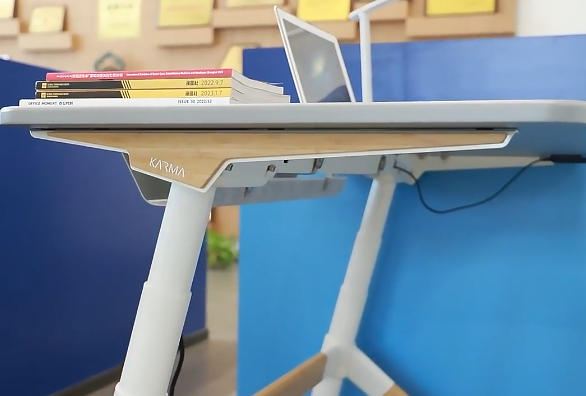
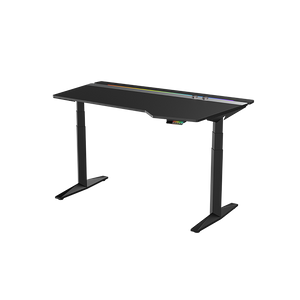
Karma Essence Slanted Leg Design Three-Stage Dual Motor Height Adjustable Standing DeskThis standing desk designed by JIECANG features a slanted leg design.
With a rated load capacity of 1200N, it can easily support computers or even thick books.
Furthermore, while typical height-adjustable desks generate considerable noise, this desk utilizes low-friction components during manufacturing, resulting in a noise level of ≤50db. This ensures that height adjustments won't disturb others, making it ideal for use in offices where quiet operation is essential.
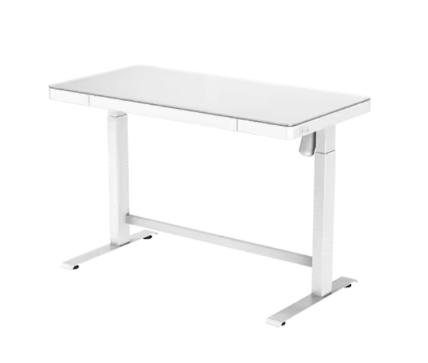
This JIECANG home office desk features a tempered glass tabletop, providing a smoother feel and a more premium look. In addition, the biggest highlight of this design is its electric height adjustment feature; simply press a button and the desk automatically raises or lowers.
It saves time and effort and is easy to operate.
How do I adjust a standing desk?
Standing desks are available in two types: manually adjustable and automatically adjustable. These two types of standing desks have different adjustment mechanisms.
1. How to adjust an electric height-adjustable office desk
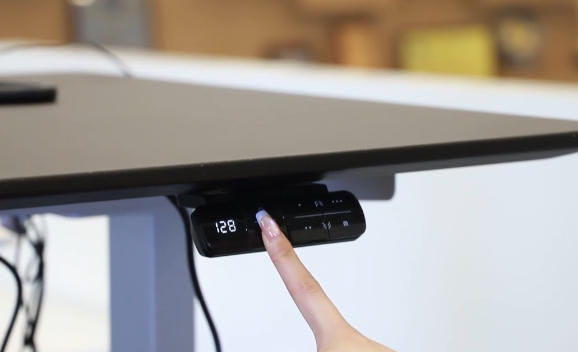
Electric height-adjustable desks are usually equipped with a control panel for easy operation. The adjustment steps are as follows:
First, press and hold the "up" or "down" button; release the button after the desktop automatically rises or lowers to the desired height.
If there is a memory function, you can also long-press the memory button to save frequently used heights, and the desk will automatically adjust to that height next time without needing to find the right position again.
It is recommended to keep your body away from the desk during the height adjustment process to avoid applying extra pressure.
2. Adjustment method for manually adjustable height office desks
Manually adjustable office desks typically require height adjustment using knobs, pins, or pneumatic mechanisms.
First, you need to loosen the locking devices on the desk legs or supports. Then, adjust the tabletop to the desired height, and finally, re-tighten the locking devices to ensure the desk's stability.
If there is a lifting handle, you can simply rotate the handle, but be sure to find a stable base point while rotating to prevent the desk from wobbling.
Although this method is slightly slower to operate, it has a simple structure and strong stability.
Summary
Adjustable standing desks are becoming increasingly common in offices, helping to alleviate the fatigue caused by prolonged sitting.
If you want to customize your desk to better suit your needs, you can try DIYing your own adjustable standing desk for a greater sense of accomplishment. If you prefer a simpler and more convenient option, consider the adjustable standing desks designed by the JIECANG brand, which are more professional and come with quality and after-sales service guarantees.
Adjustable Standing Desk FAQ
1. What are the benefits of adjustable standing desks?
The biggest advantage of adjustable standing desks is that they allow for alternating between sitting and standing while working, effectively reducing the health problems associated with prolonged sitting. Switching to a standing posture can relieve pressure on the lumbar and cervical spine, promote blood circulation, and reduce fatigue. At the same time, standing while working helps improve concentration and work efficiency, aligning with contemporary healthy office practices. Furthermore, adjustable standing desks can accommodate different heights and usage habits, making them more practical.
2. What is the height adjustment range of the adjustable standing desk?
Generally, adjustable standing desks have a height range of 60–125 centimeters, which can accommodate the sitting and standing needs of most users. The common height for sitting at a desk is approximately 70–75 centimeters, while the height for standing at a desk is typically between 100–115 centimeters. Of course, this varies depending on each user's height and specific usage scenario.
3. What are the different ways to adjust a height-adjustable standing desk?
Adjustable standing desks primarily utilize the following three adjustment methods:
Firstly, there are electric height-adjustable desks. This type of adjustable standing desk is driven by a motor and adjusted via buttons or touch controls. The height changes smoothly and operation is convenient. However, it generally requires a higher budget. This type of desk is commonly used in many offices.
Secondly, there are manual knob-operated desks, which adjust the height by rotating a handle. These have a simple structure and good stability.
The most basic type of adjustable standing desk uses pins or latches to manually adjust the height of the desk legs. This is the lowest-cost option. If you are using it at home for personal use, you might consider this type.
4. How to choose an adjustable standing desk?
To choose the adjustable standing desk that best suits your needs, you should consider your requirements, budget, usage scenarios, and the quality of the desk from all angles.
Check if the desk meets both sitting and standing posture requirements, and whether its weight capacity can stably support your computer and other electronic devices.
If you are using it in a large office setting, we recommend considering an electric adjustable desk; if you are working from home, a manual adjustable standing desk is a more economical and cost-effective option.
5. How long is the lifespan of the motor in an adjustable standing desk?
The motors used in high-quality adjustable height desks typically have a lifting cycle lifespan of approximately 10,000 to 20,000 cycles. Under normal use, this can meet the daily office needs for 5-10 years.
The main factors affecting motor lifespan include usage frequency, load capacity, and whether the desk is frequently and continuously raised and lowered. Proper use, avoiding overloading, and regular inspection and maintenance will help extend the motor's lifespan.