- Home
-
Complete Procurement Guide for Hospital Bed Side Rails
Views: 0 Author: Site Editor Publish Time: 2025-02-18 Origin: Site


Introduction
Patient safety is the cornerstone of high-quality healthcare delivery, and fall prevention ranks among the top priorities for hospital nursing and risk management teams. As a core safety component of hospital bed systems, bed side rails play an irreplaceable role in reducing inpatient fall risks, supporting patient mobility, and streamlining bedside care workflows.
For hospital procurement teams, facility managers, and nursing directors, selecting the right bed side rails goes far beyond basic fall protection. It requires alignment with clinical care needs, strict medical regulatory standards, hospital infection control protocols, and long-term durability for 24/7 high-usage environments. This comprehensive guide breaks down everything you need to know about hospital-grade bed side rails — from core definitions and value to product types, maintenance standards, selection criteria, and reliable product recommendations.
What Are Bed Side Rails?
Bed side rails are protective barrier systems installed along the edges of bed frames, designed to prevent accidental falls and provide stable leverage for position changes and patient transfers.
For residential use, bed side rails typically feature a simplified structure, focusing on basic fall prevention for elderly adults, children, and people recovering from illness at home. They are usually tool-free for installation and designed to fit standard domestic bed frames.
Hospital-grade bed side rails, by contrast, are classified as medical device components built to far stricter safety, durability, and hygiene standards. They are engineered to integrate seamlessly with various hospital bed types — including general ward beds, ICU beds, post-operative recovery beds, and transport stretchers — to support both patient safety and clinical care delivery.
Notably, ICU-specific bed side rails offer significantly upgraded performance compared to standard ward or home-use models across multiple dimensions:
Higher structural strength and impact resistance to support critical care scenarios
Smoother, faster operation to accommodate urgent treatment and rescue procedures
Strict hygiene-focused design for frequent disinfection and infection control
Integrated intelligent functions to support monitoring and care coordination
Built-in protection for life support tubes and lines to prevent dislodgement during patient movement or care
As a critical part of the ICU bed system, these specialized rails support medical staff during procedures while safeguarding vulnerable critically ill patients.
Why Should Hospitals Install High-Quality Bed Side Rails?
Investing in premium hospital-grade bed side rails delivers measurable benefits for patient safety, care efficiency, regulatory compliance, and long-term cost control.
Reduce inpatient fall and entrapment risks
Falls from bed are among the most common adverse events in healthcare facilities often leading to fractures, head injuries, extended hospital stays, and increased institutional liability. High-quality bed side rails create a reliable physical barrier to prevent restless patients, elderly adults, and people with cognitive impairment from rolling or falling out of bed during rest or sleep.
Support safe patient mobility and care delivery
Bed side rails provide a stable leverage point for patients to sit up, turn over, and adjust positions independently, reducing reliance on caregiver assistance for routine mobility. For nursing staff, properly designed rails create a secure structure to support patient transfers, repositioning, and bedside procedures, reducing the risk of occupational musculoskeletal injuries.
Meet medical regulatory and accreditation requirements
Healthcare facilities are required to meet strict patient safety standards set by regulatory bodies and accreditation organizations. High-quality bed side rails tested to recognized medical safety standards help hospitals demonstrate compliance and reduce survey and audit risks.
Support infection control protocols
Hospital-grade bed side rails are designed with non-porous, easy-to-disinfect surfaces and high ingress protection ratings, allowing for regular cleaning with hospital-grade disinfectants without material damage. This is critical for reducing healthcare-associated infection (HAI) risks, especially in intensive care and isolation units.
Deliver long-term value for high-usage environments
Hospitals operate around the clock, and bed side rails are adjusted, raised, and lowered multiple times per day by staff and visitors. High-quality, durable rails withstand frequent daily use without loosening, breaking, or requiring frequent replacement, lowering long-term maintenance and total procurement costs.
What Types of Bed Side Rails Are Used in Hospitals?
Hospitals deploy different styles of bed side rails to match different care scenarios, patient populations, and bed types. The most common types include:
Fixed Bed Side Rails
Fixed rails are permanently secured to the bed frame and cannot be lowered or adjusted in height. They provide consistent, uninterrupted fall protection, making them ideal for patients at very high fall risk, such as those with severe cognitive impairment, seizure disorders, or severely restricted mobility.
Folding Bed Side Rails
Folding rails can be lowered flat against the bed frame when not needed, creating unobstructed access for patient transfers, bed making, wound care, and other bedside procedures. They are the most widely used type in general wards, as they balance reliable safety protection with day-to-day care convenience.
Height-Adjustable Bed Side Rails
These rails allow clinical staff to modify the rail height to match different mattress thicknesses, patient sizes, and care needs. They offer flexible protection for wards serving diverse patient populations and can adapt to changing care requirements over time.
Split / Sectional Bed Side Rails
Split rails are divided into separate head and foot sections, allowing caregivers to lower only one section as needed while keeping the rest in place for continuous protection. This design offers greater flexibility for targeted care access while maintaining fall prevention for the rest of the bed.
ICU-Specific Heavy-Duty Bed Side Rails
Built for critical care environments, these heavy-duty rails feature reinforced structures, integrated control features, and enhanced hygiene design. Many models include built-in display screens for bed control and patient monitoring, and they are engineered to work seamlessly with the full articulation of electric ICU beds.
What Are the Maintenance Requirements for Hospital Bed Side Rails?
Regular, standardized maintenance is essential to keep hospital bed side rails functioning safely and reliably, and to extend their service life. Hospitals should establish a formal maintenance schedule and follow these core requirements:
1.Routine cleaning and disinfection
Clean and disinfect bed side rails after each patient discharge, and perform daily wiping for patients in isolation or high-infection-risk units.
Use hospital-grade disinfectants compatible with the rail material to avoid surface damage or corrosion. For rails with high IP ratings (such as IPX6), they can withstand more thorough washing and disinfection protocols.
Pay special attention to crevices, hinge joints, and locking mechanisms, where dirt and pathogens can accumulate.
2.Regular structural and functional inspections
Perform weekly visual inspections to check for cracks, dents, loose screws, damaged hinges, or worn components.
Test locking mechanisms monthly to confirm they engage securely and do not disengage accidentally. For electric or motorized rails, test the drive system to ensure smooth, synchronous operation.
Verify there are no dangerous entrapment gaps between the rail bars, or between the rail and the mattress / bed frame.
3.Timely component replacement
Replace any damaged, bent, or broken parts immediately — never use bed side rails with structural damage.
Keep an inventory of common replacement parts (such as locking pins, hinge components, and mounting hardware) to minimize downtime for repairs.
For rails with electronic components or display screens, test functionality regularly and replace faulty parts according to the manufacturer’s guidelines.
4.Standardized maintenance documentation
Establish a maintenance log for each bed, recording inspection dates, cleaning records, repair history, and part replacements.
Schedule annual professional inspections by the manufacturer or certified technicians to verify full compliance with safety standards.
How to Select the Right Bed Side Rails for Hospitals?
Choosing appropriate bed side rails requires aligning product specifications with your facility’s clinical needs, bed fleet, patient populations, and regulatory requirements. Follow these key criteria to make an informed procurement decision:
1.Bed type compatibility
First, confirm that the rails are designed to fit your existing bed models. Different bed types — standard manual beds, electric adjustable beds, ICU beds, bariatric beds, and transport stretchers — require different mounting systems and rail dimensions. Verify mounting hole spacing, frame compatibility, and articulation compatibility for electric beds.
2.Safety standards and certifications
Prioritize products that meet recognized medical device safety standards and hold relevant certifications, such as FDA clearance, CE marking, and ISO 13485 quality management system certification. Third-party tested rails provide verified assurance of structural strength, entrapment risk control, and material safety.
3.Material and durability
For the rail panel: Medical-grade PP (polypropylene) with one-piece blow molding is a preferred choice for hospital use, as it is non-porous, easy to clean, impact-resistant, and lightweight.
For the support frame: Choose rust-resistant, high-strength metal materials that can withstand frequent daily use and regular disinfection.
Ensure all materials are non-toxic, odorless, and resistant to aging from repeated disinfectant exposure.
4.Functional alignment with clinical needs
Consider adjustability: Choose height-adjustable or folding rails for general wards with diverse patient needs; opt for fixed full-length rails for high-fall-risk units.
For ICU and high-acuity units: Prioritize rails with synchronous drive systems for smooth, quiet operation, and optional integrated display screens for bed control and monitoring functions.
For bariatric care: Select reinforced heavy-duty rails with higher weight capacity to support larger patient populations safely.
5.Infection control suitability
Choose rails with smooth, seamless surfaces and minimal crevices to reduce pathogen buildup.
Verify the IP (ingress protection) rating. Higher IP ratings (such as IPX6) allow for more thorough washing and disinfection, which is critical for ICU and isolation ward use.
6.Installation ease and after-sales support
Confirm that installation can be completed efficiently by your facility’s maintenance team, with clear instructions and standard mounting hardware.
Evaluate the supplier’s after-sales service: availability of replacement parts, warranty coverage, technical support response time, and on-site service options.
For bulk procurement, confirm that the supplier can provide consistent supply, customization options, and long-term partnership support.
About Jiecang's Side Bed Rails
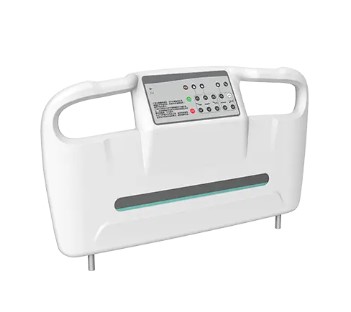
Display screen: Available in two types (with or without a screen), both in a 3.5-inch size.
Protection rating: Up to IPX6
Operating mode: Synchronous drive
The guardrails are mainly used with medical beds for treatment, rescue, and transfer of patients in hospital intensive care units (ICU) and general wards, or for nursing homes and home care; JCP35H11 guardrails consist of a headboard, Head left/right、Foot left/right and Foot board, made of PP material overall blow molding, streamlined shape design, simple design concept, comfortable use experience.
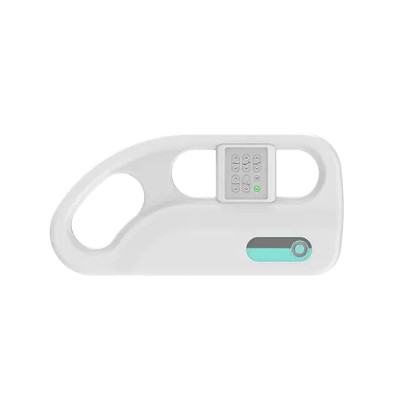
Display: Three types are available: no screen, 3.5-inch, and 7-inch. The pedal display has a tilt angle of 32°.
Weight: 27.1 kg
IP Protection Rating: Up to IPX6
Operating Mode: Synchronous drive
The side rails are mainly used with medical beds for treatment, rescue, and transfer of patients in hospital intensive care units (ICU) and general wards, or for nursing homes and home care; JCP35H10 siderails consist of a headboard, a head left/right guardrail, and a tail left/right guardrail. bed board, made of PP material overall blow molding, streamlined shape design, simple design concept, comfortable use experience.
Conclusion
Selecting high-quality, clinically suitable bed side rails is a critical investment in hospital patient safety, care quality, and operational efficiency. By understanding the different rail types, following standardized maintenance protocols, and evaluating products against strict safety, functionality, and hygiene criteria, procurement teams can select solutions that meet their facility’s needs while supporting regulatory compliance and long-term value.
Beyond bed side rails, JIECANG also offers a full range of linear actuator and control box solutions for home care and hospital beds, including backrest adjustment, leg adjustment, overall height adjustment, and intelligent features such as urine alarms, bed presence detection, obstacle retraction, and customizable alert systems. These integrated solutions help create safer, more responsive care environments tailored to individual patient needs.
Bed Side Rails FAQs
1. How to choose a suitable side bed rail?
When choosing a side bed rail, you need to consider the following points: First, the height and material of the rail to ensure that it is durable and highly suitable for users; second, adjustability, choose a rail with adjustable height or length to adapt to different bed types and usage requirements; third, safety, such as whether there is a double lock design to prevent accidental opening.
2. What is the installation method of the side bed rail?
When installing the side bed rail, you need to measure the height and size of the bed first to ensure that the rail is suitable. Then use screws or clamps to fix the rail to the bed frame according to the product instructions. Make sure the rail is firm during installation to avoid loosening or displacement.
3. What are the common types of side bed rails?
Common types of side bed rails include full-length guardrails, half-length guardrails, and split guardrails. Full-length guardrails provide comprehensive protection and are suitable for users who need high safety; half-length guardrails are convenient for getting in and out of bed and are suitable for light protection needs; split guardrails are foldable and flexible to use.
4. What should I pay attention to when using side bed rails?
When using side bed rails, you need to regularly check the stability of the rails and the integrity of the connecting parts to avoid loosening or damage. At the same time, pay attention to the gap between the rails and the bed to prevent the user's hands and feet from being stuck. For children or patients with cognitive impairment, it must be used under adult supervision.
5. Are bed side rails safe?
Side bed guardrails are safe when installed and used correctly, but attention should be paid to the guardrail gap, material and stability.