- Home
-
A Complete Guide to Innovative Patient Lift Systems in the Healthcare Industry
Views: 0 Author: Site Editor Publish Time: 2025-11-07 Origin: Site


In modern healthcare settings, patient safety and transfer efficiency have become key indicators of hospital service quality. Every day, caregivers are tasked with moving patients from beds to wheelchairs, stretchers, or shower chairs — tasks that may seem routine but carry significant risks. Improper handling can lead to secondary injuries for patients and increase the physical strain and occupational hazards for healthcare staff.
As a result, ensuring safe, efficient, and comfortable patient transfers in hospitals, rehabilitation centers, and long-term care facilities has become a critical challenge. This article provides a comprehensive overview of patient lift systems, covering their purpose, benefits, usage, and application in medical environments, helping to improve both caregiver efficiency and patient experience.
What Is a Patient Lift?
A patient lift is a medical assistive device designed to help individuals with limited mobility move safely between surfaces such as beds, chairs, or wheelchairs. It typically consists of a sturdy frame, a lifting mechanism (manual or electric), a boom arm, a sling or harness, and a control system. The main purpose of a patient lift is to reduce the physical strain on caregivers while minimizing the risk of falls or injuries during transfers. For patients who are bedridden, have weak muscle strength, or experience poor balance, a lift provides a controlled, predictable, and comfortable way to move, greatly improving both safety and efficiency in daily care routines.
How a Patient Lift Works
In terms of operation, a patient lift uses either a motorized or manual system to raise and lower the patient with the help of a sling.
Electric lifts are powered by a motor and controlled through a remote or panel, allowing for smooth and frequent transfers — ideal for hospitals and nursing facilities.
Manual lifts, on the other hand, rely on a hydraulic pump or mechanical crank to perform lifting motions; they are simpler in structure, more affordable, and better suited for home care or less frequent use.
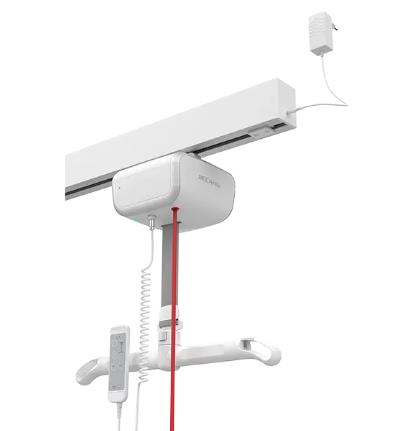
Ceiling or overhead track lifts are another variation — they run along a fixed track mounted to the ceiling, allowing patients to be moved between rooms or across spaces without requiring floor space for the base.A prime example of this type is the JIECANG JC35LT2 ceiling lift, which combines a compact footprint with advanced safety features such as emergency stop, overload protection, and smooth motorized control, making it an excellent choice for both clinical and home care environments.
Sling Types and Applications
Different sling designs serve different patient needs. When selecting a sling, it is essential to consider the patient's body type, mobility level, and comfort requirements. Slings are commonly divided into three types: full-body slings, seated slings, and hammock-style slings.
Full-Body Sling
A full-body sling covers the patient from the shoulders down to the thighs, providing complete support. It is suitable for patients who are bedridden, unable to sit independently, or cannot turn by themselves. The design evenly distributes the patient's weight across all support straps, reducing localized pressure and skin friction, which helps prevent pressure sores.
During use, the shoulder, back, and thigh support straps are attached to the lift's hooks, ensuring that the patient remains stable and does not tilt or rotate during lifting. Caregivers should always check that the sling fabric is smooth and evenly tensioned, attach the main support points symmetrically, and perform a low-height test lift before completing the full transfer.
Seated Sling
Seated slings mainly support the patient's back and pelvis, making them suitable for patients who can maintain a sitting position but still need assistance during transfers. They are commonly used when moving patients between wheelchairs, chairs, or shower seats. Seated slings maintain a stable seated posture while reducing strain on the patient's upper body and lower back.
During operation, the shoulder, back, and leg straps are attached to the lift hooks in a way that keeps the patient's center of gravity stable, preventing forward or sideways sliding. Low-height test lifts and fine adjustments are critical, particularly in confined spaces, to ensure proper fit and comfort.
Hammock-Style Sling
Hammock-style slings resemble a hammock and are suitable for larger patients or those requiring extra support. They wrap around the patient's back and thighs, providing additional stability and preventing slipping or tilting during transfers. This type of sling is particularly useful when moving patients from bed to stretcher, from floor to wheelchair, or when semi-standing support is needed.
When using a hammock-style sling, caregivers must ensure the fabric is smooth, the attachment points are balanced, and assistive staff support the patient's limbs or adjust posture if necessary. Low-height test lifts and symmetrical attachment are essential to prevent accidental sliding or pressure concentration.
Types of Patient Lifts
Patient lifts are designed to safely transfer patients, and different types are suited for different scenarios and patient needs. Based on power source, environment, and transfer method, patient lifts are mainly divided into electric lifts, manual/hydraulic lifts, and ceiling or track lifts.
Electric Patient Lift
Electric lifts are powered by motors, allowing smooth and effortless lifting. They are ideal for frequent transfers or for heavier patients. Most models include a handheld control, enabling caregivers to precisely adjust lift height and speed, reducing physical strain and minimizing operational risks.
Manual/Hydraulic Patient Lift
Manual or hydraulic lifts use a hydraulic pump or manual mechanism to raise and lower patients. They do not require electricity, making them suitable for home use or temporary care settings. Manual lifts often feature wheeled bases and foldable booms, allowing flexibility in small spaces.
These lifts are simple in structure and have low maintenance costs, although operation requires more physical effort. Caregivers need to use proper techniques when transferring heavier patients to avoid fatigue or injury.
Ceiling or Track Lift
Ceiling or track lifts use overhead rails to move patients horizontally and vertically. They are ideal for fixed routes and spaces, such as hospital rooms, bathrooms, or rehabilitation areas.
Track lifts are compact, save floor space, and provide smooth transfers across multiple locations, including beds, wheelchairs, and bathroom chairs. They are compatible with full-body or seated slings, ensuring patient stability and safety. However, installation costs are higher, and they are less suitable for portable or home use.
Benefits of Patient Lifts
Using a patient lift is an essential tool in modern healthcare, ensuring both patient safety and caregiver well-being. Its value goes beyond simply moving patients; it enhances overall care quality, reduces the risk of injury, and preserves patient dignity. Patient lifts significantly lower the risk of accidents during transfers. Compared to manual handling, they provide smooth and controlled support throughout the entire movement, preventing slips, falls, or sudden tilting. In addition, properly chosen slings distribute the patient's weight evenly, reducing pressure points and friction, which helps prevent pressure sores, bruising, or discomfort. This is particularly important for patients who are weak, post-operative, or immobile, allowing them to be transferred comfortably and with dignity.
Enhancing Patient Safety and Comfort
Patient lifts ensure that transfers are smooth and controlled, providing full support for patients throughout the process, which is especially important for those who require full-body support. With correctly selected and positioned slings, the patient's weight is evenly distributed, reducing localized pressure and skin damage, while the smooth lifting and movement also alleviate psychological stress. This creates a sense of safety and dignity, allowing patients to remain comfortable and calm during transfers.
Reducing Caregiver Physical Strain
Manual patient handling is physically demanding and can lead to musculoskeletal injuries among caregivers. Patient lifts significantly reduce the physical effort required, as most of the lifting and movement is assisted by the machine. Electric or hydraulic lifts can perform smooth, controlled lifts with minimal force, while ceiling or track lifts reduce the need for bending, reaching, or maintaining awkward postures. This not only lowers the risk of caregiver injuries but also improves workflow efficiency, allowing caregivers to focus more on patient care rather than exhausting physical labor.
Improving Care Efficiency and Overall Outcomes
Patient lifts are highly adaptable to different care environments, including hospital wards, rehabilitation centers, long-term care facilities, and home care. Whether transferring a patient from bed to wheelchair, wheelchair to shower chair, or from the floor after a fall, lifts provide stable and reliable support throughout the process. They reduce the risk of transfer-related accidents and increase operational efficiency, improving overall care quality while lowering caregiver fatigue and stress. When combined with compatible slings and intelligent safety systems, such as emergency stop, overload protection, and smooth control, patient lifts not only ensure patient safety but also offer a highly efficient and reliable solution for modern healthcare facilities.
How to Use a Patient Lift
Using a patient lift correctly is one of the most important steps in ensuring both patient safety and caregiver well-being.Although different models or brands may vary slightly in operation, the general procedure remains the same: prepare thoroughly, position the sling properly, lift smoothly, and transfer carefully.
Each stage requires attention and patience, as even small mistakes can cause discomfort or potential injury. To better illustrate these principles in practice, the following guide takes the JIECANG Patient Transfer System as an example, combining its typical electric and manual lift features for a detailed step-by-step explanation.
When using a JIECANG patient lift, safety must always come first. Before every operation, carefully check each component of the device—including the main body, power supply or battery, brakes, sling, and all connecting parts—to ensure that everything is intact and functional. During the lifting process, movements should be steady, slow, and well-controlled, while maintaining continuous communication with the patient to help them understand each step and reduce anxiety. Equally important, never exceed the rated capacity—always refer to the lift's nameplate or user manual to verify the maximum load (Rated Capacity), and never operate beyond this value. If uncertain, measure or consult the manufacturer before proceeding.
Additionally, always use a sling that is either supplied or recommended by JIECANG, or confirmed as compatible. The sling should also be selected based on the patient's body size and the type of transfer—such as full-body support, half-body support, or under-thigh support—to ensure both safety and comfort.
Equipment and Environment Preparation
Before each use, follow a fixed sequence of inspection and documentation to minimize the risk of accidents. Begin with a visual and functional inspection of the lift. Make sure the body frame has no cracks or bending, that operation produces no unusual sounds, and that the base and casters move smoothly. Also, check that the boom, spreader bar (shackle), and locking pins are secure and properly fastened.
For electric models, confirm that the control box or handset switch is functional and that the battery is sufficiently charged. It's recommended to fully charge before use and perform a short, unloaded up/down motion test to ensure the lift moves smoothly and quietly. For manual or hydraulic models, ensure the pump operates without resistance or oil leakage, and that all brake and locking mechanisms function properly.
Next, inspect the sling thoroughly—ensure the fabric shows no tears, fraying, or abrasion, and that all metal rings or clips are free from deformation or cracks. Sling labels (indicating size, capacity, and model) should remain clear and must match the lift in use.
Finally, assess the environment and patient readiness. The floor should be clean and free of hazards such as carpet folds, power cords, or scattered objects. Make sure wheelchair or bed wheels are locked before proceeding. Before starting the transfer, explain every step to the patient to confirm cooperation and check for pain or discomfort. If the patient's weight exceeds the device's rated capacity, or if the patient is unable to cooperate, stop immediately and request assistance from at least one additional caregiver or use a more suitable device.
Basic Connection and Trial Lift
Before initiating the transfer, keep the manual and control handset within reach for easy reference. Move the lift base close to the patient's bed or chair, aligning the boom roughly with the centerline of the surface. Spread the lift base and lock the brakes as needed to ensure close proximity and stability .
Next, assist the patient to roll slightly to one side (if possible), and smoothly slide the sling beneath the patient's back, extending to the thigh or hip area depending on sling type. The fabric should remain flat, wrinkle-free, and symmetrically distributed to ensure even weight support. Then, connect the sling loops to the corresponding hooks or points on the spreader bar—attach the main symmetrical loops first, then the remaining ones. For safety, begin with only one or two key loops to perform a low-height trial lift.
During the trial lift, briefly press the “Up” button or operate the hydraulic pump to raise the patient just a few centimeters. Observe for any rotation, slippage, or discomfort, and check that no part of the sling is pinched or twisted. If all appears stable, continue slowly lifting the patient to the desired height. Throughout this process, maintain smooth, controlled motions and keep talking to the patient for reassurance and feedback (jiecang.com).
Three Common Transfer Scenarios
The following examples use the electric JIECANG patient lift; for manual or hydraulic models, replace powered lift/lower operations with hand-pump actions—other steps remain the same.
Bed → Wheelchair Transfer
Begin by positioning the wheelchair beside the bed and locking the wheels. Fold or remove the footrests to make room for the patient's legs. Adjust the bed to a proper height and remove side obstacles. Help the patient roll to one side or assist with turning (with at least one helper on the opposite side for safety). Slide the sling under the shoulders, hips, and thighs so that weight is evenly supported. Return the patient to a supine or semi-sitting position, ensuring the sling lies flat.
Attach the sling loops symmetrically to the spreader bar and briefly press the “Up” button to raise the patient 5–10 cm, checking for balance and comfort. Once confirmed, continue raising until the body clears the bed surface. Carefully push the lift toward the wheelchair, maintaining a safe gap between the base and bed, and ensuring the wheelchair seat is at equal or slightly lower height than the patient's hips. When aligned, press “Down” slowly until the patient's hips gently touch the seat. A helper may gently guide the upper body if needed. Once stable, unhook the front straps first, followed by the rest, and remove the sling carefully.
Wheelchair → Toilet/Commode Transfer
This procedure is similar to the bed-to-wheelchair transfer, though it requires finer alignment due to the narrower target surface. Place the wheelchair at a 45° angle to the toilet or commode and lock the wheels. Ensure the seat is ready and footrests do not obstruct the area. After attaching and testing the sling, lift the patient slightly above the wheelchair, move slowly toward the toilet, and lower gradually to seat height. Use low-speed mode for precision, allowing the patient's hips to gently make contact before unhooking.
Floor (Fall or Seated on Ground) → Wheelchair Transfer
This is a high-risk scenario, and should always involve two caregivers (or one caregiver with a lift) and a special “floor-to-sit” sling with support handles. First, clear the surrounding area of debris, and if the patient shows signs of fracture or severe pain, seek medical evaluation before proceeding. Position the lift base close to the patient's side and spread the base for maximum stability. Apply the specialized floor sling in a semi-wraparound manner, supporting the upper back and shoulders, with the lower section under the thighs or behind the knees (as per sling instructions).
Attach the sling loops and perform a slow, controlled trial lift, raising the patient only to a seated or semi-standing position. Confirm that the knees and feet are safely positioned (ideally, the patient's feet should lightly touch the floor for balance). If transferring to a wheelchair, move it close, lock the wheels, adjust the lift height precisely, then lower the patient gently onto the seat before releasing the straps.
Across all transfer types, follow the same guiding principles: “Trial lift first – Move carefully – Adjust slowly – Detach last.” Maintain calm, deliberate movements, be attentive to patient comfort, and keep the emergency stop or manual lowering feature accessible in case of unexpected situations.
JIECANG Patient Lift System
In hospitals and care centers, nurses face one of the most demanding and critical tasks every day — safely helping patients move, whether from a bed to a wheelchair or from a stretcher to a shower chair. On the surface, these movements may appear simple, but in reality, they require a combination of strength, precision, and trust. Even a single unstable motion can put the patient at risk while increasing the chance of injury for the caregiver, which makes choosing the right equipment and mastering proper techniques absolutely essential.
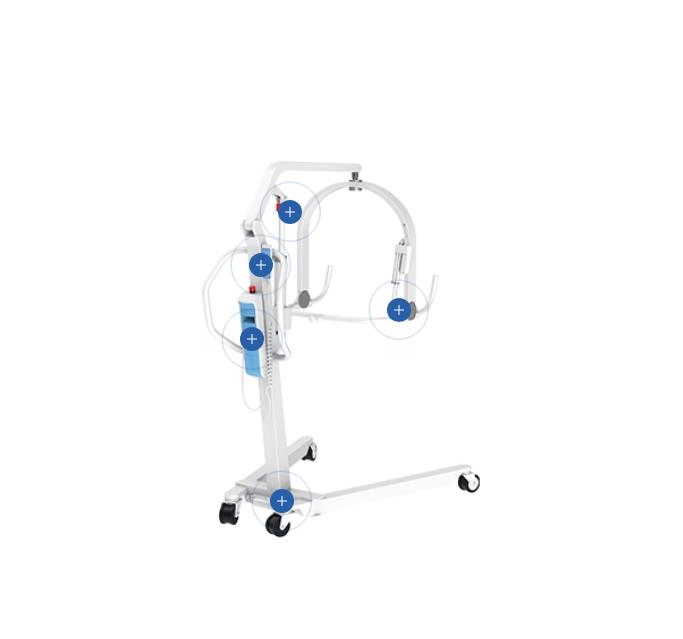
This is precisely where the JIECANG Patient Lift System comes into play. Designed specifically for real hospital and care scenarios, it provides smooth and controlled lifting, ensuring that every transfer is not only stable but also comfortable. With this system, caregivers can perform daily transfers more easily and confidently, reducing physical strain while giving patients a greater sense of safety and reassurance.
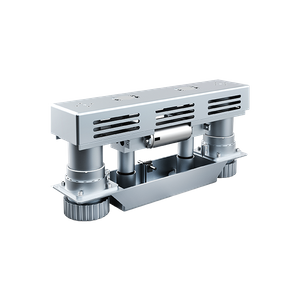
The system consists primarily of linear actuators, control boxes, and handsets, forming a reliable and intelligent lifting solution widely used across wards, ICUs, rehabilitation centers, and long-term care facilities. Thanks to its strong driving force and precise control, caregivers can handle transfers safely and efficiently, minimizing the risk of secondary injuries caused by manual handling. It is also worth noting that JIECANG lifts come in both basic and advanced configurations. The advanced models feature smart control modules with emergency stop protection, overload alerts, and maintenance reminders, ensuring safer and more reliable equipment management.
In addition, hygiene and safety are equally critical in clinical environments. JIECANG products comply with ISO9001 and ISO14001 quality management standards and are certified by CE, UL, KC, and RoHS. With an IPX6 waterproof rating, the system maintains excellent performance even during routine cleaning and disinfection, making it ideal for wards, operating rooms, and rehabilitation centers where strict hygiene standards must be met.
Therefore, for healthcare institutions, choosing the JIECANG Patient Lift System is more than just adopting a reliable medical device — it represents a tangible improvement in both caregiving efficiency and patient safety. Each transfer becomes smoother and safer, allowing caregivers to focus on what truly matters — the well-being and comfort of their patients. With intelligent control, stable performance, and medical-grade design, the JIECANG Patient Lift System is increasingly becoming the trusted choice for hospitals and care facilities, bringing higher safety, comfort, and human-centered care to modern healthcare.
Conclusion
Safe and efficient patient transfers are essential in modern healthcare. Implementing effective patient lift systems not only reduces the risk of injury for patients but also eases the physical demands on caregivers. By integrating well-designed lifts into daily routines, hospitals, rehabilitation centers, and long-term care facilities can enhance operational efficiency, ensure consistent safety standards, and improve overall patient comfort.
In short, patient lift systems are not merely equipment — they are a critical component of quality care, helping caregivers focus on what truly matters: the well-being and dignity of every patient.
Patient lift System FAQ
What is a patient lift system?
A patient lift system is a medical device designed to safely assist patients with limited mobility in transferring between surfaces such as beds, wheelchairs, or stretchers, minimizing the risk of injury for both patients and caregivers.
Who benefits most from using patient lifts?
Patients with limited mobility, poor balance, or weak muscle strength benefit from the controlled, safe transfers. Caregivers also benefit by reducing physical strain and preventing occupational injuries.
Are patient lift systems suitable for all healthcare environments?
Yes, patient lift systems can be used in hospitals, rehabilitation centers, nursing homes, and even home care settings, depending on the model and configuration.
How do patient lifts improve caregiver efficiency?
They allow smooth, controlled transfers, reducing manual effort and the time needed for patient movement. This increases overall workflow efficiency while maintaining patient safety.