- Home
-
Linear Actuator: The Compelete Guide to Understanding Linear Actuator
Views: 0 Author: Site Editor Publish Time: 2024-10-14 Origin: Site


If you’ve ever asked, "What is a linear actuator?" or are researching how to select the right electric linear actuator for your project, you’ve landed on the right page. This comprehensive guide breaks down everything you need to know about linear actuators — from core definitions and working principles to types, applications, sizing, and common pitfalls. Whether you're a hobbyist, engineer, or home automation enthusiast, this guide will give you the knowledge to choose, install, and maintain linear actuators with confidence.
What Is a Linear Actuator?
A linear actuator is a mechanical device that converts energy — most commonly from an electric motor — into controlled, straight-line (linear) motion. Unlike rotary actuators that produce circular movement, linear actuators move objects forward and backward (push and pull) along a single axis.
At its core, an electric linear actuator uses a motor (AC or DC), a gear reduction system, and a lead screw to generate precise linear movement. This push-pull motion allows actuators to lift, lower, slide, tilt, or adjust objects with the simple press of a button.
How Does an Electric Linear Actuator Work?
An electric linear actuator transforms the rotational motion of an electric motor into straight-line motion through a simple, reliable mechanical chain. Here is the step-by-step process:
1.An AC or DC electric motor generates rotational power.
2.A gear box reduces the motor’s rotational speed while increasing torque, allowing the actuator to produce higher force.
3.The gear system drives a lead screw (typically an ACME leadscrew for durability) to spin along its axis.
4.A nut fixed to the actuator’s rod travels along the threads of the lead screw.
5.As the screw spins, the nut moves forward or backward, pushing or pulling the rod to create linear motion.
6.Built-in limit switches stop the motor automatically when the rod reaches full extension or full retraction, preventing damage.
This simple mechanism makes electric linear actuators extremely versatile. They excel at automating the "3 Ds" — Dirty, Dull, or Dangerous tasks — while also improving convenience in everyday life, from TV lifts and height-adjustable desks to kitchen appliance automation.
Compared to hydraulic and pneumatic alternatives, electric linear actuators require no pumps, hoses, or compressed air systems, making them easier to install, more energy efficient, and lower maintenance.
Key Types of Linear Actuators
While all linear actuators produce straight-line motion, different designs are built for specific use cases, space constraints, and load requirements. Below are the three most common categories of electric linear actuators.
Standard Electric Linear Actuators
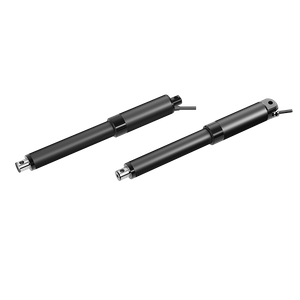
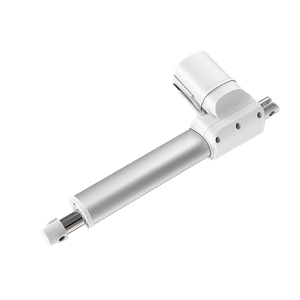
Standard linear actuators are the most widely used type, featuring a single-stage rod and a fixed stroke length. They are available in a wide range of force ratings, stroke lengths, and speeds, making them suitable for most general-purpose applications — from industrial machinery to home automation projects.
Lifting Columns (Telescoping Linear Actuators)
A lifting column is a specialized type of linear actuator designed for extended stroke lengths and high vertical stability. It features multiple telescoping stages that extend significantly further than a standard actuator while collapsing into a very compact form.
Unlike traditional linear actuators, lifting columns include built-in linear guides that provide excellent resistance to side loads. This makes them the ideal choice for height-adjustable desks, workstations, and medical equipment where stability under offset loads is critical.
Micro Linear Actuators
Micro linear actuators are compact, miniaturized versions of standard linear actuators, engineered for small-scale applications and tight installation spaces. With strokes typically ranging from 10mm to 100mm, they excel at precise, low-force tasks such as adjusting electronics, opening small hatches, or powering animatronics. Due to their smaller motor size, their force output is lower than that of full-size actuators.
Electric Linear Actuators vs. Hydraulic & Pneumatic Systems
Linear motion can be achieved with electric, hydraulic, or pneumatic systems — but electric linear actuators offer unique advantages for most applications.
Feature Electric Linear Actuators Hydraulic Actuators Pneumatic Actuators Setup Complexity Low; just power and a control switch High; requires pumps, valves, hoses and fluid Medium; requires compressed air system Precision & Control Excellent; precise speed and position control Moderate Poor; difficult to fine-tune position Maintenance Minimal; lifetime lubrication High; risk of fluid leaks and regular servicing Moderate; air line maintenance Cost Mid-range; low total cost of ownership High upfront and ongoing cost Mid-range; high energy cost Cleanliness Clean; no fluids Risk of hydraulic fluid leaks Clean Noise Level Quiet Noisy pump operation Noisy air exhaust Electric linear actuators deliver unmatched simplicity, safety, and precision for lifting, tilting, or pushing applications. While hydraulic actuators can produce extremely high forces, their bulky setup, maintenance requirements, and leak risks make them impractical for most commercial, residential, and light industrial uses. Pneumatic actuators are fast but lack precise position control and require a constant compressed air supply.
Applications of Linear Actuators
Linear actuators are everywhere, automating tasks in homes, industries, agriculture, marine, and robotics. Common real-world uses include:
Home automation: TV lifts, projector lifts, hidden doors, motorized window treatments, kitchen appliance lifts
Marine: engine hatches, motorized hatches, slide-out steps, throttle control
Automotive & outdoor: snowplow adjusters, truck bed lifts, tonneau covers
Industrial: damper control, conveyor adjustments, height-adjustable workstations, hopper controls
Agriculture: farming implement adjustments, solar panel tilting
Robotics & animatronics: robotic limbs, prop movement, interactive displays
Accessibility: wheelchair lifts, adjustable beds, medical equipment positioning
Critical Technical Concepts to Know Before Buying
Understanding these key technical terms will help you select the correct linear actuator and avoid costly mistakes.
Static Load vs. Dynamic Load: What’s the Difference?
Two of the most important specifications for any linear actuator are static load and dynamic load — and they are not interchangeable.
Dynamic load refers to the maximum force a linear actuator can safely apply while moving (extending or retracting). This is the rating you should use when sizing an actuator for lifting, pushing, or pulling a load.
Static load refers to the maximum force a linear actuator can safely hold when stationary, with no motion.
Always select an actuator whose dynamic load rating exceeds your moving load, with a safety margin of 25-50% for reliable operation.
Load Direction: Tension, Compression & Side Loading
Linear actuators are designed to handle forces applied along their central axis:
Compression: pushing force when the actuator extends
Tension: pulling force when the actuator retracts
Side loading (radial loading) — force applied perpendicular to the actuator’s centerline — and eccentric loading (off-axis force) should always be avoided. These forces cause binding, premature wear, and can permanently damage the lead screw and rod.
If your application involves side loads, mount the moving object on drawer slides to carry the weight, or use a dedicated track actuator designed to handle radial forces.
Limit Switches: How They Protect Your Actuator
Nearly all electric linear actuators include built-in limit switches (electro-mechanical or magnetic) that automatically cut power to the motor when the rod reaches full extension or full retraction. This prevents the motor from stalling and burning out at the end of stroke.
Some premium actuators, including Firgelli’s patented adjustable limit switch models, allow users to fine-tune the stroke endpoints for custom travel lengths.
Motor Types: AC vs. DC Linear Actuators
Linear actuators use either AC or DC electric motors:
DC motors (12V or 24V): The most common type, ideal for compact, high-force applications. 12V DC actuators are widely used in automotive, marine, and off-grid projects. 24V DC models offer higher efficiency for industrial use.
AC motors (110V / 220-240 VAC): Used for heavy-duty, fixed-installation industrial actuators where mains power is readily available.
Speed & Force Tradeoff
Linear actuator speed is determined by the gear ratio of the gear box. There is an inherent tradeoff:
Higher gear reduction = higher force, slower speed
Lower gear reduction = faster speed, lower force
Every actuator model offers multiple speed/force options to match your application requirements.
Duty Cycle: What It Means for Performance
Duty cycle measures an actuator’s allowable "on-time" as a percentage of total operating time, or the distance it can travel over a given period before needing to cool down. Exceeding the duty cycle can cause the motor to overheat and shorten actuator life.
For a deep dive, read our full article: What is Duty Cycle in a Linear Actuator?
IP Ratings & Environmental Protection
Linear actuators are available with different levels of environmental protection, defined by IP (Ingress Protection) ratings:
IP54: Dust-protected and splash-resistant, suitable for indoor and light outdoor use
IP66: Dust-tight and high-pressure water jet resistant, suitable for wet outdoor and industrial environments
Backdriving & Brakes
Most standard electric linear actuators can be back-driven — meaning an external force can move the rod — if the force exceeds the friction of the gear train and lead screw. For applications that require secure position holding under heavy loads, choose an actuator equipped with a brake.
⚠️ Important: Never run a linear actuator into a hard stop at either end of travel. Hard stops can jam the lead screw, strip gears, or damage the motor. Always rely on built-in limit switches.
How to Choose the Right Linear Actuator?
Selecting the correct linear actuator doesn’t have to be complicated. Follow these 5 core steps to narrow down your options:
Calculate your required dynamic force: Measure the load you need to move, and add a 25-50% safety margin. This will be your minimum dynamic load rating.
Determine your required stroke length: Measure the total distance the load needs to travel.
Define your speed requirement: Decide how fast you need the load to move. Remember: higher speed means lower force for the same motor size.
Check environmental conditions: Choose an appropriate IP rating for indoor/outdoor use, temperature, and exposure to moisture or dust.
Select mounting and control options: Confirm clevis mount compatibility, and choose between basic switch control or smart synchronized control for multi-actuator setups.
Common Causes of Linear Actuator Failure & How to Avoid Them
With proper use, electric linear actuators are extremely durable. Most failures stem from avoidable mistakes:
Overloading: Exceeding the dynamic or static load rating is the number one cause of failure. Always size with a safety margin.
Side or eccentric loading: Radial forces bend the rod and damage the nut and screw. Use linear guides for offset loads.
Improper mounting: Misaligned mounting causes binding and uneven wear. Always align the actuator perfectly with the direction of motion.
Extreme operating conditions: Operating outside the rated temperature range or IP rating causes premature wear and corrosion.
Exceeding duty cycle: Continuous operation beyond the rated duty cycle overheats the motor.
Advanced Topics: Synchronization, Mounting & Maintenance
Can Multiple Linear Actuators Be Synchronized?
Yes, two or more linear actuators can be synchronized for uniform motion. This requires actuators with position feedback (such as potentiometer-equipped feedback actuators) and a dedicated synchronization controller.
Mounting Options
Most linear actuators feature clevis mounts on both ends, which allow for slight pivoting during operation. Custom mounting brackets are available for flat mounting, angle mounting, and special installation scenarios.
Maintenance & Lubrication
Quality electric linear actuators are factory grease-lubricated for life and require no regular maintenance. Standard industrial models are tested to operate reliably across a temperature range of -20°C to +100°C, and withstand rapid temperature cycling without loss of function.
Future Trends in Linear Actuator Technology
Linear actuator technology continues to evolve, with emerging innovations focused on smarter, more sustainable, and quieter operation:
Integrated smart sensors and self-diagnostics for predictive maintenance
AI-driven motion control for adaptive, efficient operation
Wireless connectivity and IoT integration for remote monitoring and control
Energy harvesting features for off-grid and sustainable applications
Advanced noise reduction designs for residential and office use
Whether you’re building a TV lift, an adjustable desk, or industrial equipment, the key to success is selecting the right actuator for your load, stroke, and environment. Reach out to our engineering team for personalized recommendations.
Frequently Asked Questions About Linear Actuators
1.What is the main purpose of a linear actuator?
The main purpose of a linear actuator is to convert rotational energy into controlled straight-line motion, allowing objects to be pushed, pulled, lifted, lowered, tilted, or slid automatically.
2.How much weight can a linear actuator lift?
Linear actuators are available in a wide range of force ratings, from a few pounds for micro models to over 2000 lbs for heavy-duty industrial actuators. The exact lifting capacity depends on the specific model’s dynamic load rating.
3.Are linear actuators waterproof?
Not all linear actuators are waterproof. Always check the IP rating: IP66-rated actuators are dust-tight and resistant to high-pressure water jets, making them suitable for wet outdoor use, while IP54 models are only splash-resistant.
4.Can linear actuators hold position when turned off?
Standard linear actuators hold position through gear friction, but can back-drive under heavy load. For secure position holding, choose an actuator with an integrated brake.
5.How long do linear actuators last?
With proper sizing and use within rated specifications, electric linear actuators typically last for tens of thousands of cycles. Lifetime lubrication and sealed construction mean there are no regular service requirements.