- Home
-
How Linear Actuators Help Solar Panels Track the Sun and Improve Efficiency?
Views: 0 Author: Site Editor Publish Time: 2025-10-21 Origin: Site


In the rapidly growing renewable energy industry, solar tracking systems play a crucial role in maximizing the power output of photovoltaic panels. One of the key components behind these systems is the linear actuator — a compact, reliable, and efficient motion device that helps solar panels follow the sun's movement throughout the day.
After extensive testing, this article explores how linear actuators enhance the performance and efficiency of solar tracking systems, why they are preferred over other motion technologies, and how to choose the right actuator for your solar applications.
What is a Linear Actuator?
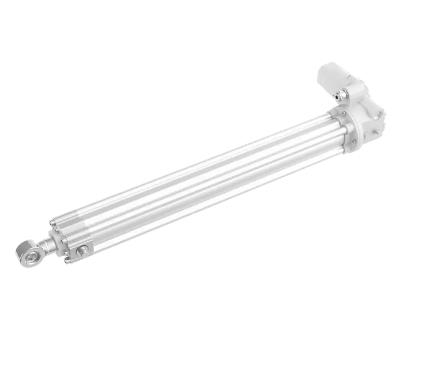
A linear actuator is an electromechanical device that converts the rotational motion of a motor into linear motion. It typically consists of a motor, gears or screw mechanism, and a push rod, enabling smooth and controllable extension and retraction under different load conditions. In solar tracking applications, linear actuators move solar panels via their extendable push rods, automatically adjusting the tilt or rotation of the entire PV module according to the sun's position, ensuring maximum sunlight capture and improving power generation efficiency.
These actuators can be driven by DC motors, consuming low power, and are often powered directly by the same solar system. In some smart systems, Arduino or other microcontrollers can work with sensors to achieve automated control, allowing linear actuators to move precisely according to the sun's angle at different times of the day.
Moreover, modern linear actuators are compact, weather-resistant, and suitable for outdoor use. They can withstand wind loads, rain, and UV exposure, while operating quietly and requiring low maintenance. This makes linear actuators indispensable core components in residential, commercial, and large-scale solar power plants' single-axis or dual-axis solar tracking systems.
The Role of Linear Actuators in Solar Tracking Systems
1. Precise Sun Tracking
Solar panels achieve maximum efficiency when sunlight hits perpendicularly. However, the sun's angle changes throughout the day, and morning and evening incidence angles reduce PV module output.
Using a linear actuator allows solar panels to dynamically adjust tilt and orientation, achieving precise sun tracking throughout the day. This automated adjustment not only reduces power loss but also significantly increases overall energy output.
With high-precision linear actuators, PV modules can continuously fine-tune angles, ensuring sunlight strikes the panel surface almost perpendicularly. Experimental data shows that systems using solar linear actuators can increase energy output by 15% to 40% compared to fixed-angle installations. This not only boosts solar panel efficiency but also reduces system costs by minimizing redundant panels.
2. Single-Axis and Dual-Axis Tracking
Solar tracking systems primarily come in two types, both heavily relying on linear actuators:
a. Single-Axis Tracker: This system allows solar panels to move east-to-west throughout the day. Each row of PV modules is typically controlled by one linear actuator, achieving synchronized tilt adjustments. Single-axis trackers are simple, cost-effective, and ideal for residential or small commercial applications.
b. Dual-Axis Tracker: By synchronously adjusting both vertical and horizontal directions, solar panels can accurately follow daily and seasonal solar movements. Dual-axis systems require two or more synchronized linear actuators to ensure PV module surfaces maintain optimal incidence angles at all times.
Whether single-axis or dual-axis, linear actuators ensure solar systems operate efficiently under varying lighting conditions. Controlled by Arduino or other microcontrollers, these actuators enable automated and intelligent operation, while remaining low-power and easy to maintain.
3. Smooth and Reliable Motion Control
Compared to hydraulic or pneumatic systems, electric linear actuators offer distinct advantages in motion control:
a. Smooth and precise movement: Push rods can move with micrometer-level accuracy, ensuring solar panels adjust angles smoothly without losses caused by vibration or inertia.
b. Low maintenance costs: No hydraulic oil or compressed air systems are required, reducing maintenance complexity and long-term expenses.
c. Low power consumption: DC-driven actuators consume minimal energy and can be powered directly by solar panels.
d. No risk of fluid leaks: Suitable for long-term outdoor operation, especially in remote solar farms or off-grid systems.
Furthermore, modern linear actuators are compact, weather-resistant, and typically rated IP65/IP67, resisting dust, rain, and UV exposure. This reliability makes them essential in residential, commercial, and large-scale solar tracking systems.By using high-performance linear actuators, system designers can ensure stable PV module operation, extend equipment lifespan, and improve the ROI of solar projects, achieving low-cost, high-efficiency power generation.
Advantages of Linear Actuators in Solar Systems
In modern solar applications, linear actuators serve as the core motion component, providing precise positioning and efficient power generation for solar panels. Whether in single-axis or dual-axis solar tracking systems, they stabilize PV module angles, enabling automated all-day adjustment. This reliable linear motion technology not only enhances real-time power generation efficiency but also strengthens long-term reliability and sustainability. Below, we detail the advantages of linear actuators in five aspects: high precision, energy efficiency, weather resistance, low maintenance, and scalability.
1. High Precision
Linear actuators can achieve micrometer-level positioning for solar panels. In single-axis or dual-axis solar tracking systems, this ensures PV modules face the sun throughout the day. High-precision control significantly improves power generation efficiency and reduces energy loss caused by incorrect incidence angles, optimizing overall PV performance.
2. Energy Efficiency
Modern linear actuators are typically driven by low-power DC motors, directly powered by solar panels without extra energy input. Their low-power design saves energy and ensures stable long-term operation. When paired with smart control systems, linear actuators respond efficiently to adjustment commands, enabling automated sun tracking all day and maximizing overall energy utilization.
3. Weather Resistance
Linear actuators feature IP65/IP67 protection, resisting rain, dust, and UV exposure, ensuring stable and smooth outdoor operation. This durability makes them suitable for residential, commercial, or large-scale solar farms. Even in harsh conditions, linear actuators operate reliably, guaranteeing long-term system safety.
4. Low Maintenance Costs
Linear actuators require no hydraulic oil or compressed air, reducing maintenance and simplifying use. Even in remote or off-grid solar systems, solar linear actuators are easy to maintain, lowering labor and operational costs. Their simple design reduces failure rates, enhancing reliability and lifespan.
5. Scalability
Linear actuators are applicable to small residential rooftops and large solar farms. Multiple actuators can be combined for flexible expansion and automated management. This scalability ensures systems can be customized and upgraded while maintaining high efficiency across PV modules during all-day operation.
How Linear Actuators Improve Overall Efficiency?
Linear actuators maintain the optimal angle between sunlight and the solar panel surface, minimizing energy loss from poor incidence angles. In high-efficiency solar tracking systems, each actuator is precisely calibrated and works with sensors and controllers to automatically adjust PV positions throughout the day, ensuring optimal sunlight exposure.
Systems driven by high-performance linear actuators can boost overall energy output by up to 40% annually while reducing the number of solar panels needed for the same output, lowering initial system costs. High-efficiency operation and low maintenance significantly improve ROI.
Modern linear actuators paired with smart control systems provide automated, timed adjustments and remote monitoring, further enhancing system efficiency, reliability, and long-term sustainability. With proper layout and control, linear actuators are indispensable components in modern solar applications.
How to Choose the Right Linear Actuator for Solar Applications?
Selecting the right linear actuator is critical when designing and deploying solar tracking systems. The right actuator ensures solar panels adjust accurately under varying light conditions while maintaining long-term stable operation and efficient power generation. Key factors include:
1.Load Capacity
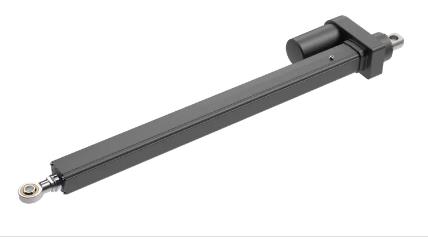
The load capacity of a linear actuator determines how much weight of solar panels and wind load it can support. In large photovoltaic projects, each row of solar panels may bear 500–1000 kg and withstand wind speeds of 30–40 m/s. Choosing an actuator with a load capacity 20–30% higher than actual requirements ensures long-term stable operation and extends service life. For example, the JIECANG JC35SA5 linear actuator is designed for industrial and outdoor environments with high load capacity. It provides up to 65,000 N static load capability, suitable for heavy-duty applications.
2.Stroke Length
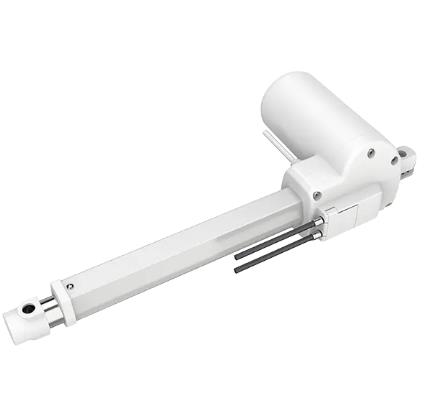
Stroke length determines the range of actuator movement, affecting the tilt adjustment of solar panels. Typically, a stroke length of 300–600 mm is recommended to ensure single-axis or dual-axis trackers can adjust to the optimal incident angle throughout the day and across seasons, maximizing sunlight capture and power generation. Insufficient stroke may limit tracking angles and reduce overall system performance. For instance, the JIECANG JC35L35 linear actuator is designed for industrial automation and high-load applications, with stroke lengths from 50 to 250 mm, adjustable every 4 mm, meeting diverse application needs.
3.Speed
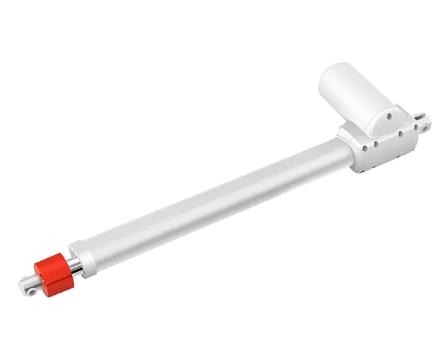
Although solar tracking systems do not require very high speed, stability and precision are critical. A recommended actuator speed of 5–15 mm/s ensures smooth adjustment of solar panels, avoiding excessive stress on supports or structures. Accurate speed control allows actuators to make hundreds of micro-adjustments daily, ensuring optimal sunlight capture.
For example, the JC35L28 linear actuator has a maximum speed of 4–10 mm/s, performing well for applications requiring quick response, performing well for applications requiring quick response.
4.Protection Level
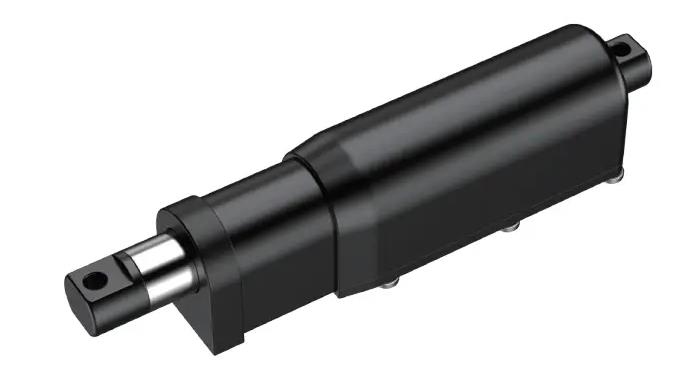
Solar systems are usually installed outdoors, so linear actuators must have good protection. At least IP65 is recommended for dust, rain, and UV resistance. For large arrays exposed to harsh weather, IP66 or IP67 is more suitable. High protection ensures reliable operation under various climates, reduces maintenance, and extends equipment life. For example, the JC35FA20A is designed for outdoor and industrial automation, offering excellent protection. Its IP66 rating prevents dust ingress and withstands strong water flow, ensuring long-term stable operation.
5.Operating Voltage
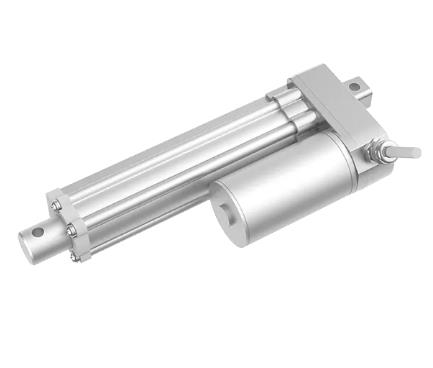
Voltage compatibility is another key factor. 12VDC or 24VDC is the most common standard and is compatible with most solar panels. Matching voltage allows actuators to be powered directly by solar panels, reducing extra energy consumption, ensuring low power operation, and maintaining long-term stable performance. For instance, the JC35W8 linear actuator operates at 12VDC, making it compatible with most solar panels without additional power conversion.
By carefully considering load capacity, stroke length, speed, protection level, and operating voltage, system designers can select the most suitable linear actuator for residential, commercial, or large-scale solar projects. Proper selection ensures solar tracking systems operate efficiently, reliably, and sustainably, improving power generation while significantly reducing maintenance costs and ensuring long-term stable operation.
JIECANG Solar-Specific Linear Actuators
As a global leader in linear motion technology, JIECANG provides high-performance, durable, and reliable linear actuators widely used in solar tracking systems and outdoor automation. Two outstanding models — JC35SA15 and JC35SA16 — combine high load capacity, precise motion control, and excellent protection, suitable for residential to large commercial solar farms.
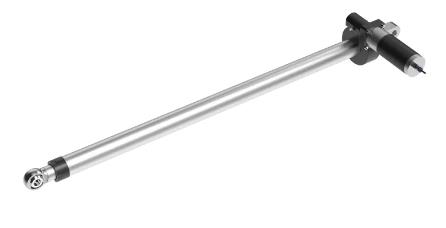
JIECANG JC35SA15 Linear Actuator
JC35SA15 is designed for solar tracker and outdoor automation applications, offering up to 30 kN dynamic and 40 kN full-stroke static load, supporting large solar panel arrays under wind and heavy loads. Stroke ranges from 700 to 1130 mm for single or dual-axis tracking. Equipped with limit switches and 0.5 mm/s speed, it ensures smooth, precise adjustments, suitable for all scales of solar tracking systems.
JIECANG JC35SA16 Linear Actuator
JC35SA16 is a high-performance linear actuator for solar tracker and outdoor automation. Max dynamic load is 14.7 kN, stroke 123–456 mm, 0.5 mm/s speed, and IP66 rated for outdoor reliability. Supports both fixed and adjustable installation, ensuring PV modules face the sun at optimal angles, improving efficiency and ROI.
Conclusion
Linear actuators are core components of modern solar tracking systems, enabling dynamic adjustment of solar panels to maximize sunlight capture and PV efficiency. Using high-quality JIECANG JC35SA15 and JC35SA16 ensures optimal tilt angles throughout the day, reduces energy loss, and enables smooth, precise motion control.
These actuators offer high load capacity, weather resistance, low maintenance, and long lifespan, lowering operational costs and increasing ROI. For designers planning or upgrading solar tracking projects, choosing JIECANG linear actuators ensures precision, reliability, and sustainability, making solar systems smarter, more efficient, and stable under diverse environmental conditions.
Solar Linear Actuator FAQ
1. How to power a solar linear actuator?
Use DC power compatible with the solar system, e.g., 12VDC or 24VDC. Connect directly to the solar panel output. For Arduino control, include current protection. Linear actuators consume low power and can be solar-powered directly. Choose IP65+ rated actuators for outdoor reliability.
2. What to do if a linear actuator stops working?
Check power supply (12VDC/24VDC), wiring, solar panel, and control system. If Arduino controlled, verify program logic. Mechanical blockage or excessive push rod resistance may occur; manually adjust or follow manufacturer reset instructions. Keep actuators clean, lubricate lightly if necessary.
3. Possible reasons for a linear actuator not moving
Overload, wind load, weight, delayed or disrupted control signals, environmental factors such as dust, moisture, cold, or UV, or mechanical wear/lubrication issues. Addressing these during design and installation ensures stable operation and system reliability and efficiency.