
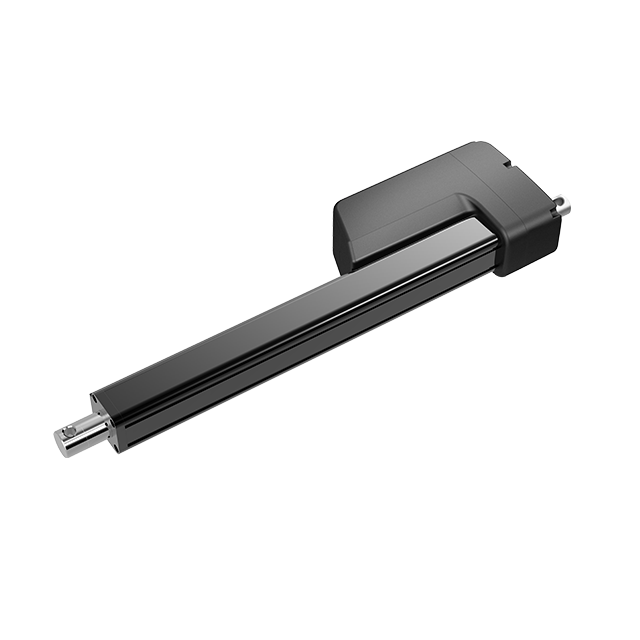
If you’re searching for Linear Actuator Manufacturers, then chances are you need something that moves precisely—whether it’s for industrial automation, medical equipment, or DIY home projects. With so many brands on the market, choosing the right Linear Actuator Manufacturers can be a challenge. That’s why we’re analyzing the top players in the industry, what to look for, and how to find the best manufacturer for your needs.
With the continuous improvement of automation, intelligent manufacturing, and production precision, industrial linear actuators are playing an increasingly important role in modern industry. With higher precision, stronger load capacity, more intelligent control methods, and lower maintenance costs, they are gradually replacing traditional cylinders and manual operation, playing a crucial role in improving production efficiency, reducing costs, enhancing stability, and increasing intelligence. With further technological development, future industrial linear actuators will be even more efficient and intelligent, becoming an indispensable part of automated production systems.
A linear actuator is a mechanical device that converts electrical, hydraulic, or pneumatic energy into linear motion. Simply put, its function is to "push or pull" an object, causing it to move along a straight line, rather than rotating. It is commonly used in smart homes, mechanical equipment, medical devices, and industrial automation, and is a core component that works silently in many modern devices.
The Intensive Care Unit (ICU) is one of the hospital areas with the highest requirements for safety and operational efficiency. As a crucial safety component of hospital beds, transfer trolleys, and observation beds, 'bed rails' not only serve the function of fall prevention but also impact medical staff workflow, patient comfort, and infection control within the hospital. Therefore, selecting a high-standard ICU bed rail is of vital importance to healthcare institutions.
For individuals with reduced mobility, unsteady gait, or those undergoing rehabilitation, maintaining stability and confidence in walking is one of the most important needs in daily life. While traditional walking aids provide support, they often limit movement speed and lack sufficient flexibility for outdoor or long-distance walking.Roller Walkers have revolutionized assistive walking devices, making them more comfortable and flexible. Through front-mounted or four-wheel design, an adjustable frame, braking system, and ergonomic handlebars, they allow users to achieve a more natural gait, a more effortless movement experience, and reduce the risk of falls due to fatigue and imbalance.
Toilet Lifts are typically installed near the toilet. An electrically operated lifting mechanism slowly lowers the seat, allowing the user to sit on the toilet in a natural and stable posture. After use, the seat rises again, helping the user stand up easily and reducing the risk of leg weakness, balance problems, or needing assistance. Through its electrically operated lifting mechanism and non-slip support structure, the toilet lift effectively reduces the risk of falls, lessens the burden on caregivers, and enhances the independence and dignity of daily toilet use. Therefore, it is increasingly widely used in homes, nursing homes, hospitals, and rehabilitation centers.
A Bath Lift is an assistive device designed to enable individuals with mobility impairments to safely enter and exit standard bathtubs and take baths. It operates via electric or pneumatic lifting mechanisms, allowing users to sit on a chair that descends smoothly to the bottom of the bathtub for bathing, and then rises again to facilitate easy exit from the tub. Typically composed of a seat, backrest, electric lifting structure, and remote control, it is one of the common barrier-free bathing devices in bathrooms, suitable for use in home environments, nursing homes, rehabilitation centers, and similar settings.
With the popularization of smart home and automated devices, as one of the most commonly used home elements in daily life, curtains have also begun to integrate more technological innovations. Among these, the emergence of Tubular Motors has been a key technology driving the popularization of smart curtains.