- Home
-
Best lightweight Smart Rollator Walker with seat in 2025
Views: 0 Author: Site Editor Publish Time: 2025-11-06 Origin: Site


In 2025, choosing the right rollator walker is not just about walking convenience—it also impacts safety, comfort, and independence. Modern rollator walkers have evolved beyond traditional walking aids, incorporating lightweight designs, foldable frames, built-in seats, upright support, and even electric assistance or wheelchair features. These advanced capabilities provide comprehensive mobility solutions for a wide range of users. Whether for seniors, rehabilitation patients, or anyone needing daily walking support, these multifunctional rollator walkers significantly enhance quality of life and freedom of movement. This guide will provide a thorough overview of rollator types, features, use scenarios, and tips for selecting the most suitable model for your needs.
What is Rollator Walker ?
A rollator walker is a modern mobility aid designed to support individuals who need assistance with walking while offering stability and freedom of movement. Many models include wheels, hand brakes, comfortable grips, and a built-in seat, making it convenient for both indoor and outdoor use. Some advanced designs, such as the Smart Rollator Walker, integrate technology to help users monitor their activity, track health, or receive safety alerts, providing an added layer of convenience and peace of mind.
Rollator Walker Features and Benefits
Mobility and Comfort
A rollator walker allows users to move smoothly while maintaining balance and support. The wheels reduce fatigue and make longer distances more manageable. For those who need to rest frequently, models such as the rollator walker with seat or foldable rollator walker with seat offer convenient seating. Lightweight rollator walkers are easier to carry and transport. Modern options like the Smart Rollator Walker not only provide mobility support but also integrate intelligent features that help users maintain independence safely.
Versatility and Accessories
Many rollators include useful accessories such as storage baskets, cup holders, trays, and adjustable handles (rollator walker accessories), enhancing daily usability. Models designed for taller users, like the best rollator walker for tall people, ensure comfortable posture. Hybrid designs, such as the rollator walker wheelchair, offer flexibility by combining walking support with seating. The Smart Rollator Walker stands out by merging these features with digital enhancements, allowing users to stay connected and monitored while remaining mobile.
Specialized Rollator Types
For improved posture, the upright rollator walker encourages users to walk with a straight back, reducing strain. Electric rollator walkers provide motorized assistance for longer walks or users with limited endurance. The Smart Rollator Walker, in particular, incorporates sensors, health tracking, and alert systems, offering an additional layer of safety and convenience that traditional rollators do not provide. By integrating technology with mobility, it ensures users can walk confidently while keeping an eye on their well-being.
What Are the Differences Between Them?
Traditional rollator walkers primarily provide basic mobility support and stability, featuring wheels, hand brakes, comfortable grips, and optional seats to help users move more easily indoors and outdoors. In contrast, a Smart Rollator Walker builds on these core features by adding technology to make everyday use more convenient, safe, and engaging.The smart features are reflected in several key areas:
Health Monitoring and Activity Tracking
Many Smart Rollator Walkers can track steps, walking distance, and usage time. This is particularly useful for seniors or post-surgery patients who need to monitor their activity levels and avoid overexertion. One user shared that after each walk in the park, they could see their daily step count and distance on a mobile app, which motivated them to maintain a regular walking routine.
Safety Alerts and Fall Detection
Some smart models include fall detection sensors. If a user falls or suddenly stops moving, the walker can automatically send an alert or notify family members or caregivers. This added layer of safety is especially reassuring for users who are alone at home or out in the community. A senior user commented, “Knowing the walker can alert someone if I fall makes me feel much safer when I go out alone.”
Navigation and Assistance
Certain smart rollators can provide voice prompts or connect with mobile apps for route planning, walking goals, or activity reminders. For example, a user living near a community park can set daily walking distance targets, and the walker will notify them when they reach milestones or remind them to take breaks and stay hydrated.
Automatic Assistance Features
Some Smart Rollator Walkers include motorized assistance or intelligent braking systems. Sensors adjust resistance automatically, reducing the effort required from the user. This is particularly helpful when navigating slopes or long distances. One user noted, “On long inclines, the automatic assistance makes walking much easier—I don’t have to constantly brake manually.”
Smart rollators are suitable for a wide range of scenarios. Indoors, they help seniors move freely while tracking steps and activity levels. Outdoors, they provide safety monitoring and navigation support during walks, trips to the store, or community events. For rehabilitation or post-surgery patients, the health monitoring features allow for a controlled and safe exercise routine. Overall, users report feeling more confident, less fatigued, and able to maintain independence and mobility in daily life.
In summary, traditional rollator walkers mainly provide basic support and stability. The Smart Rollator Walker goes further by enhancing mobility with technology. It combines health monitoring, activity tracking, and safety alerts, transforming the walker into a smart companion for everyday life and rehabilitation.
2. Rollator vs Walker
Basic Structure
A traditional walker typically consists of a sturdy frame with four legs, sometimes with two front wheels. It provides substantial support for individuals who need to bear weight or stabilize themselves. Rollators, on the other hand, usually feature three or four wheels, built-in brakes, hand grips, and often a seat or storage basket. The wheels allow smoother movement, especially for those with moderate balance or endurance challenges.
Mobility and Support
Walkers are ideal for users who require maximum weight support, such as those recovering from surgery or experiencing significant lower body weakness. Rollators provide less weight support but improve mobility and allow longer walking distances with less fatigue. They are particularly useful when equipped with features like a foldable rollator walker with seat, allowing rest during movement, or a lightweight rollator walker, making transportation easier.
Additional Features
Rollators often come with accessories such as storage pouches, cup holders, or trays (rollator walker accessories). Specialized versions include upright rollator walkers for better posture support, electric rollator walkers for powered assistance, and rollator walker wheelchair hybrids for users who sometimes need full seating. These enhancements make rollators versatile for indoor and outdoor use.
3. Choosing the Right Device
Assessing Your Needs
When deciding between a walker and a rollator, consider your balance, endurance, and strength. If you need a high level of stability and weight support, a walker is generally safer. For those who can walk independently but need balance assistance, a rollator provides more freedom and convenience.
Selecting Rollator Features
Consider your lifestyle when choosing rollator types. If you need frequent resting, a rollator walker with seat or foldable rollator walker with seat is recommended. For lighter transport and travel, a lightweight rollator walker is ideal. Taller individuals should seek the best rollator walker for tall people, ensuring comfortable posture. Accessories (rollator walker accessories) can enhance usability, and an upright rollator walker may help with posture support. For added mobility assistance, an electric rollator walker can be considered.
Walker Advantages
Walkers remain the go-to choice for individuals who require maximum stability or are recovering from injuries. They provide solid support, reduce fall risk, and are simple to use with minimal adjustments. While less mobile than rollators, walkers offer unmatched safety for high-risk users.
The choice between a rollator and walker depends on your physical abilities, lifestyle, and specific mobility needs. Rollators offer versatility, comfort, and longer walking support with options like rollator walker wheelchair, foldable seat models, and electric assistance, while walkers provide maximum stability for those requiring strong support. Understanding your needs and exploring available accessories can help you select the perfect mobility aid. Always consult a healthcare professional to ensure safety and suitability.
What Makes the “Best” Rollator Walker in 2025?
Choosing the best rollator walker means looking beyond mere brand names and focusing on a combination of price, value, wheel design, weight, seating options, and features/technology. Below is a breakdown of what to evaluate—and why these factors matter—so you can spot the best rollator walker for your needs in 2025.
Price and Value
Choosing the best rollator walker involves not only considering features and technology but also price and value for money. According to market data, rollator walker prices generally range from budget models starting at around US$70, to mid-range models around US$100‑200, and high-end models with lightweight frames, large wheels, seats, or smart features that can reach US$300‑600 or more. Budget models are suitable for occasional indoor use, but if you frequently go outdoors or need extra features (like large wheels, adjustable handles, or a seat), investing a bit more is often worth it. Consider “cost vs. functionality”: how often will you use it, and will you need to transport or store it? Foldable and portable models are often worth the slightly higher price.
Wheel Count and Size
Three‑wheel vs four‑wheel vs six‑wheel: Some rollators have three wheels (often for tighter indoor spaces), more commonly four wheels, and a few even talk of six‑wheel designs for extra stability or specialized terrain. The rule of thumb: more wheels and larger diameter wheels = better outdoors and over uneven surfaces, but may sacrifice maneuverability indoors.
Wheel size and material: Bigger wheels handle curbs, grass, gravel better; good tires (air‑filled or high‑quality PU) reduce vibration and fatigue.
So in 2025, the “best” rollator walker will often offer large wheels (8‑12″ or more) if you go outdoors, or smaller/more compact wheels if mostly indoors.Weight
How heavy is the rollator itself? A lighter frame (aluminum, carbon‑fiber) makes it easier to lift into a car, fold, and carry. For example, one ultra‑light model weighs just ~11 lbs. If you travel, transport it, or have limited strength, a lightweight rollator walker is a major plus.
Seating vs No Seating
Some rollators come with a built-in seat so you can pause and rest—this is great if you walk longer distances or need frequent breaks. Others omit the seat for simpler, lighter design.
If you’ll be using it outdoors, at parks, on errands—look for the “rollator walker with seat” option. If mostly indoor and just need support while walking short distances, a seat may be optional.Traditional vs Tech‑Enhanced Features
In 2025, the “best” rollator walker often includes smart or enhanced features: adjustable handles (for users of different heights), foldability, high‑quality brakes, even sensors or tech integrations in advanced models. For example, ergonomic grips reduce fatigue and adjustable height handles improve posture. If budget allows, getting a model with these extra features gives more future‑proof functionality.
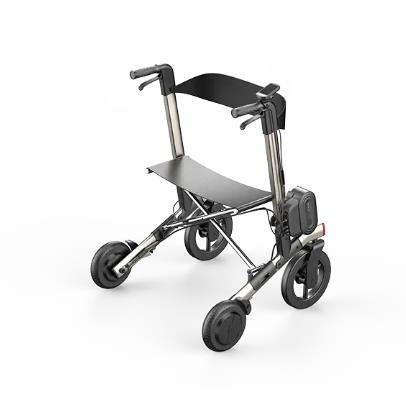
So, taking everything into account, the Jiecang JC35LT5 Smart Rollator Walker stands out as one of the best options on the market in 2025. This rollator walker successfully combines lightweight design, smart features, and a built-in seat, meeting a wide range of daily mobility needs. Equipped with dual brushless motor control, sensors for terrain detection, handgrip sensors, and voice prompts, it provides a safer and more comfortable walking experience. Additionally, the JC35LT5 supports multiple battery stacking to extend range, with a single-battery version capable of cruising over 10 km, making it ideal for longer walks or outdoor activities.
The walker features 8-inch drive wheels and a total weight of approximately 2.1 kg for the standard power version or 3.4 kg for the high-power version, making it extremely portable. Its compact folding design allows easy storage in vehicles or homes, and it is compatible with most existing rollator walker frames. Most importantly, this Smart Rollator Walker is priced at just US$147.99, offering excellent value for a lightweight, smart, and seat-equipped rollator.
In summary, if you are looking for a rollator walker in 2025 that balances portability, technology, and comfort, the JC35LT5 is a highly competitive choice. Whether for indoor short-distance use or extended outdoor walks, this model provides stable, safe, and intelligent support, making it a top recommendation among lightweight rollator walkers, foldable rollator walkers with seat, and smart rollator walker options.
Conclusion
Whether using a traditional rollator walker or a smart rollator walker, selecting the right mobility aid is essential for safety and comfort. Understanding the different types, features, and use scenarios allows users to make the best choice for their needs. Lightweight and foldable designs make transportation easier, built-in seats provide convenient rest, upright support encourages proper posture, and smart features can add extra safety and convenience.
A rollator walker is more than just a walking aid—it is a reliable companion for daily life and rehabilitation. Choosing the right model helps reduce fatigue, improve mobility, and make every step more comfortable, while boosting independence and confidence. Whether for short indoor walks or longer outdoor activities, knowing the device’s features and aligning them with personal needs is key to an optimal experience.
In summary, by understanding rollator walker types and features and considering individual needs and lifestyle, users can enjoy safer, easier, and more independent mobility, enhancing their quality of life every step of the way.
Rollator Walker FAQ
1. What is the difference between a rolling walker and a rollator?
A rolling walker usually has two or four wheels and provides basic support and stability, requiring the user to lift or push it manually. A rollator typically has three or four wheels, hand brakes, and optional seating, allowing smoother movement and offering a place to rest or store belongings during longer walks. If you want flexibility indoors and outdoors with added comfort and convenience, a rollator is the better choice.
2. Which is better, a 3-wheel or 4-wheel rollator?
Three-wheel rollators are more maneuverable in tight spaces and indoors, but slightly less stable. Four-wheel rollators provide greater stability and are better suited for longer walks and outdoor use.
3. Does Medicare pay for a rollator?
Medicare typically covers medically necessary walking aids such as standard walkers or wheelchairs, but most rollators—especially those with seats or smart features—may not be reimbursed.
4. Are rollators suitable for tall people?
Absolutely, but careful selection is key. Tall people should look for rollators with adjustable handle heights, appropriate seat height, and well-designed wheels. Make sure the frame provides stability and comfort so that your arms and back are not overly bent while using it. Overall, high-quality four-wheel rollators or adjustable smart rollators are ideal choices for tall