- Home
-
Application of Tubular Motors in Smart Curtains
Views: 0 Author: Site Editor Publish Time: 2025-08-28 Origin: Site


With the popularization of smart home and automated devices, as one of the most commonly used home elements in daily life, curtains have also begun to integrate more technological innovations. Among these, the emergence of Tubular Motors has been a key technology driving the popularization of smart curtains. With advantages such as compact size, quiet operation, and easy installation, Tubular Motors enable curtains to achieve precise, stable, and efficient automatic control, making them an indispensable core component in modern smart home systems and automated devices.
This article will delve into what Tubular Motors are, their application scenarios and advantages, as well as how to choose a suitable Tubular Motor.
1. What is a Tubular Motor?
Tubular Motor is a cylindrical electric drive device that can be installed inside a roller tube. It is commonly used in devices such as roller shutters, rolling doors, smart curtains, and shading systems that require operation through a 'rolling' mechanism. Due to its shape resembling a metal tube and its ability to be directly placed inside the roller tube, it is named a 'tube motor'.
2.How is the Control of Tubular Motor Implemented in Smart Curtains?
The core structure of the Tubular Motor includes a motor, a speed reduction mechanism, a torque output shaft, and an electronic control module:
Motor Start: After receiving the command, the motor begins to rotate.
Speed Reduction Mechanism Adjusts Speed: Bles functions such as remote control,interlocking, and timed opening/closing, allowing integration into a complete smart home system.
The tubular motor control system in smart curtains relies on the coordinated operation of the motor, drive module, and control signals to achieve functions such as opening and closing, stopping, positioning, and automation. The core principle is not complex, but to adapt to smart home scenarios, control methods are becoming increasingly diverse and intelligent.
For example:
1. Physical button control: Directly connect to a wall switch or remote control receiver → control "up/down/stop".
2. Wireless remote control (RF/433/868MHz): The curtain main unit has a built-in RF receiver module; commands are sent via the remote control → the motor executes the action.
3. Smart APP/Wi-Fi control: This involves adding a Wi-Fi/Zigbee/BLE module to the motor or receiver, enabling one-button control of opening and closing via a mobile APP.
Examples include: setting preset positions (e.g., 10%, 50%, 100%), automatically opening in the morning/closing in the evening, different strategies for weekdays and weekends, etc. This is suitable for smart home ecosystems such as Google Home, HomeKit, and Huawei HarmonyOS.
4. Voice control: Once integrated into the smart home ecosystem, it supports voice commands such as "Hey Siri, open the living room curtains," and "Xiaodu, pull the bedroom curtains to 50%."
Furthermore, the control method for the tubular motor in smart curtains has evolved from manual to remote control to intelligent control.
Its core lies in precise limit positioning + stable motor drive + multi-protocol intelligent access, thereby achieving: precise opening and closing, position control, automated energy saving, and scene linkage. As smart homes become more widespread, curtain motors will become increasingly quiet, precise, energy-efficient, and easy to integrate.
3.Typical Application Scenarios of Tubular Motor
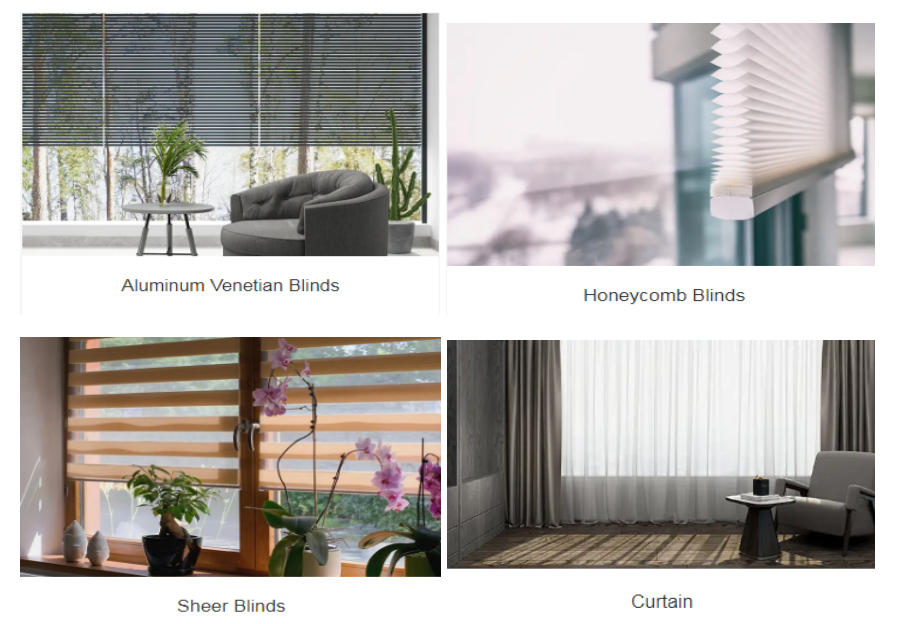
a. Residential Homes
Large-area floor-to-ceiling windows in living rooms
Light-blocking roller shutters in bedrooms
Sunlight curtains in kitchens and studies
This enhances convenience and gives the overall home a more modern, tech-savvy feel.
b. Commercial Spaces
Smart blinds and roller shutters in offices
Automatic shading systems in meeting rooms
Automatic curtains in hotel guest rooms
These can be integrated for control, improving space utilization efficiency.
c. Public Buildings
Libraries, schools, exhibition halls
Modern high-positioned curtains in lobbies
Especially suitable for large-area curtains at high positions that are inconvenient to operate manually.
d. High-End Smart Home Systems
When paired with light, temperature, and environmental sensors, they can synchronize light adjustment and energy-saving cooling, achieving intelligent (linkage). For example:
Automatically close when sunlight is too strong
Simulate sunrise to open curtains at dawn on a timer
Automatically close all curtains in \"Away Mode\" when leaving home
4.Specifications and Parameters of Tubular Motor
Aluminum Venetian Blind Tubular Motors JCV24SAES-0630
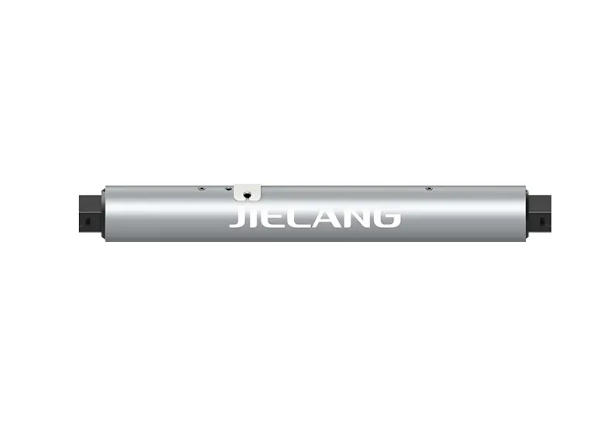
Rated Torque 0.6 N.m,Rated Speed 20/30/40 rpm,Rated Power 9.6W,Rated Current 0.8A,Maximum Shade Size 70"x 118" | 1.7m x 2.9m,Weight Capacity 7 lb ¦ 3 kg, Length 5.63" ¦ 143mm
TDBU Tubular Motor JCV30SAED
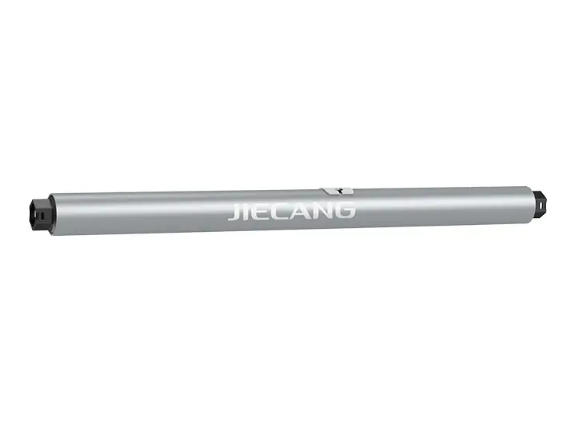
Rated Torque 0.6*2 N.m,Rated Speed 20/30/40rpm,Power,SupplyAdapter 12V/3A,Certification RoHS
Can be applied to fabric blinds, small wooden blinds, or wood-grain blinds.
The products mentioned above are recommended based on our experience, and other products and control solutions can also be used.
5.How to Choose a Suitable Tubular Motor for Your Smart Curtain Control System?
When selecting an appropriate tubular motor, consider the following factors:
1、Power and torque: Choose the motor specifications based on the weight and size of the curtain or roller shutter.
2、Control method: Wired control, wireless remote control, or smart home integration.
3、Brand and after-sales service: Select a reliable brand to ensure quality and service.
4、Installation environment: Indoor and outdoor installations have different requirements for waterproofing and dustproofing.
5、Compatibility: Whether it is compatible with smart home systems (such as Google Home and Alexa).
6.What are the Benefits of Using a Tubular Motor?
a. Compact size and high concealment
The tubular motor is cylindrical in shape and can be directly hidden inside the curtain roller, without affecting the curtain's appearance design, making it very suitable for modern minimalist, ultra-minimalist spaces that pursue clean lines.
b. Smooth operation and low noise
The tubular motor features a vibration-reducing structure and a precision gear system, ensuring smooth movement and extremely low noise. Even in quiet environments such as bedrooms or baby rooms, it will not cause disturbance.
c. Precise control and high reliability
It can achieve precise control of rising, descending, and stopping positions, with minimal repeated positioning error, making it suitable for smart curtain systems with high requirements for opening and closing positions.
d. Long service life and low maintenance needs
The tubular motor has a simple structure, with key components highly encapsulated, making it less susceptible to dust and moisture. It remains stable and durable even with long-term use.
e. Compatible with multiple control methods
It supports various control methods such as wireless remote control, mobile App, voice assistants (e.g., Alexa, Google Assistant), and smart home platform integration, enhancing the user experience.
CONCLUSION
The emergence of Tubular Motors has elevated curtains from mere light-shielding tools to true smart home devices. With features such as compact size, low noise, high stability, and diverse control methods, they are widely applied in residential homes, commercial spaces, and large public buildings. As smart home technology becomes more popularized, smart curtains will no longer be a premium feature but a convenient lifestyle accessible to ordinary families, and tubular motors are the core driving force behind this progress.
Frequently Asked Questions About Tubular Motors
Q1:What is the general lifespan of a tubular motor?
Typically, it can last more than 8–10 years, and high-quality brands may even last longer, depending on the frequency of use and the environment.
Q2:Tubular Motors Is the installation difficult?
It is usually very simple, requiring only to embed the motor into the winding tube and fix the two end brackets. The maintenance required is also extremely low.
Q3:Can it be integrated with existing intelligent platforms?
Tubular motors that support protocols such as Wi-Fi, Zigbee, and BLE Mesh can seamlessly connect with mainstream platforms like HomeKit, Alexa, Google Home, and Tuya.