- Home
-
Selecting the Best Patient Transfer System for Hospitals, Nursing Homes, and Home Care
Views: 0 Author: Site Editor Publish Time: 2025-12-02 Origin: Site


Patient lifting systems are indispensable equipment in modern medical and home care, primarily used for raising, lowering, transferring, and adjusting the posture of patients, playing a particularly important role in the care of patients with limited mobility or who are bedridden. Whether in hospitals, nursing homes, or home care environments, patient lifting systems improve nursing efficiency, enhance patient comfort, ensure safety during the care process, and reduce the workload of nursing staff.
What Is a Patient Lift System?
A patient lifting system is a medical device consisting of a power unit, support structure, hoisting device, control system, safety protection, movement mechanism, and power supply system. Additional accessories can be added to achieve more functions. It is designed to assist patients in lifting, transferring, or adjusting their posture, especially in the care of patients with limited mobility or those who are bedridden for extended periods. The system assists patients in sitting up, lying down, and turning to their side on a bed or other equipment through mechanical or electric means, and is typically designed to be convenient, safe, and easy to operate.
Types of Patient Lift Systems
Benefits of Patient Lift Systems
1.Protecting Patient Privacy and Dignity
The lifting system offers stable lifting and a wide adjustment range, allowing for adjustments to the angle and posture according to the patient's physical condition. This ensures patient comfort and stability during movement, reducing pain or fear. It also avoids the awkwardness of manual lifting, enhancing patient psychological comfort and a sense of respect.
2.Reducing Back Injury Risk for Caregivers
Caregivers who frequently move patients are prone to lumbar spine injuries, muscle strains, and occupational diseases. The lifting system mechanizes the movement, significantly reducing the need for manual effort and lowering the risk of injury for caregivers, making nursing work easier and safer.
3.Reducing the Risk of Falls from Strenuous Movements
The patient lifting system reduces the risk of falls, slips, and sprains common during manual movement, preventing secondary injuries to patients during transfers. Through a stable lifting and support structure, patients can be transferred in a fixed and controlled manner, such as from bed to wheelchair, or from wheelchair to bathroom or examination table.
4.Improving Nursing Efficiency and Safety
Using lifting equipment allows transfer tasks that previously required two to three caregivers to be easily completed by a single caregiver. This allows hospitals, nursing homes, or home care to improve efficiency and dedicate more time to other care tasks, thus optimizing resources.
How to Choose the Right Patient Lift System ?
1. Patient Condition and Weight/Body Type
Confirm the system's maximum load-bearing capacity. If the patient is heavy or may be obese/overweight, choose a model with a higher load-bearing capacity and a more stable structure. Standard portable or home-use models are generally suitable for light/moderate weight patients, while systems used in institutions or hospitals may support higher loads.
Also, consider whether the type of harness is suitable for the patient's body type. For example, full-body harnesses/high-back harnesses/slings specifically designed for larger patients should provide good support and comfort.
2. Usage Environment and Space Conditions
In hospitals, nursing homes, or multi-bedroom rooms, consider installing a ceiling-track lift/fixed-track lift. These systems are suitable for long-distance, room-to-room, or cross-functional area transfers.
In homes, single rooms, or environments requiring frequent movement, portable/mobile floor lifts/mobile hoists may be more suitable. Their advantages include flexibility, easy storage, and suitability for various scenarios.
3. Patient Mobility and Nursing Needs (Transfer vs. Standing vs. Lying-Up Turning)
If the patient is able to exert some effort, needs to transition from a sitting to a standing position, or participates in rehabilitation training, a standing lift (sit-to-stand / stand-up lift) can be chosen.
If the patient is completely unable to support themselves (bedridden, critically ill, disabled, or unconscious), a full-body sling + suspended/fully electric/ceiling-rail system is recommended to ensure a safe, stable, and low-risk transfer process.
4. Nursing Frequency and Intensity
In hospitals/nursing homes/intensive care environments with frequent use and high workloads, electric or automated systems are recommended to reduce the physical burden on caregivers and improve efficiency and safety.
For occasional short-distance transfers or light nursing care, manual/portable/simple systems may be sufficient and more economical.
5. Safety, Comfort, and Maintenance Requirements
The system should have necessary safety mechanisms, such as overload protection, emergency stop/emergency lowering, stabilizing locking wheels, and anti-fall-off suspension.
Compatibility and comfort of the sling are also important. Choosing a sling type suitable for the patient's condition and nursing needs helps reduce patient discomfort and secondary injuries.
For long-term/frequent use, attention should be paid to the equipment's durability, ease of maintenance, battery life or replacement, and spare parts availability to ensure long-term reliable system operation.
JIECANG Patient Lift System Solutions
JIECANG has cultivated deep expertise in the medical and nursing equipment field for many years. Leveraging its powerful electric actuator technology, intelligent control platform, and system integration capabilities, JIECANG provides reliable lifting solutions for hospitals, nursing homes, and home care. Its core advantages are reflected in the following aspects:
1. Robust Electric Actuation Technology Capabilities
JIECANG possesses independently developed electric actuators, electric lifting columns, and power systems, boasting advantages such as high load capacity, high stability, low noise, and long lifespan, capable of withstanding frequent use and the stringent requirements of medical-grade environments.
2. Medical-Grade Safety Standards and Reliability
All systems comply with relevant medical equipment standards, featuring overload protection, anti-pinch design, emergency descent, and high-level protective structures to ensure the highest level of patient safety during transfer and lifting.
3. Flexible Track and System Integration Capabilities
JIECANG offers various patient lifting solutions, including fixed, mobile, and ceiling-mounted types. Track layout planning can be tailored to room structure and nursing workflows, supporting seamless transfer across rooms and multiple areas.
4. Intelligent Control Platform Support
The system can be integrated with a smart nursing platform, supporting one-click operation, location memory, fault diagnosis, and power monitoring. It can also interface with hospital management systems to improve nursing efficiency.
5. Abundant Products and Mature Supply Chain
From power units, track systems, and lifting devices to intelligent controllers and accessories, JIECANG provides a complete product chain, facilitating rapid implementation and stable mass production for customers.
Typical Case Studies:
1. Hospital Installation Case
A ceiling-mounted patient lift system was deployed in the wards and rehabilitation department of a general hospital.
Features:
Coverage of beds, wheelchair areas, and shower areas.
High-load design meets the needs of long-term, high-frequency care.
Intelligent control systems allow for quick operation by nursing staff.
Suitable for intensive care, postoperative rehabilitation, and long-term bedridden patients.
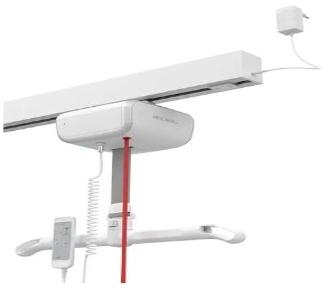
Among numerous ceiling-mounted patient transfer systems, the JIECANG JC35LT2 ceiling lift is recommended. It boasts a load capacity of up to 440 pounds (approximately 200 kg) and is easy, flexible, and reliable to operate. With its high-performance motor and low-noise design, the JC35LT2 ceiling lift can operate smoothly in hospital wards, rehabilitation centers, and even home care environments. It is suitable for short-distance transfers within wards, pre- and post-operative patient transport, rehabilitation training, or daily care of long-term bedridden patients. Its emergency stop and safety protection functions provide additional safety, offering reliable support for caregivers and patients.
2.Nursing Home Renovation
Installing H-shaped track systems in nursing home rooms, corridors, and common areas enables movement between areas.
Advantages:
Improves care efficiency and reduces physical burden on caregivers;
reduces the risk of falls and secondary injuries;
facilitates the implementation of "barrier-free care processes" in long-term care facilities.
3.Home Care
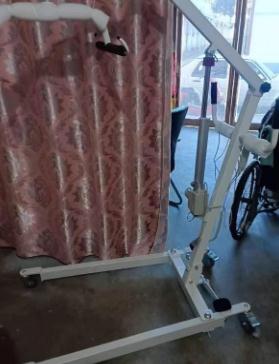
Install a simple track or portable lift between the bedroom and bathroom area.
Highlights:
Does not disrupt existing decor; Foldable solution suitable for small spaces; Supports single-person care, significantly improving safety.
CONCLUSION
JIECANG's core value in the healthcare and nursing field lies in its ability to not only provide powerful electric actuators but also empower medical devices through safe, stable, and intelligent solutions. Whether it's professional nursing processes in hospitals or gentle long-term care at home,JIECANG continuously drives the healthcare industry towards higher standards with its brand strength, technological innovation, and reliable quality, bringing a more humane, convenient, and safe experience to patients and caregivers. More importantly,JIECANG provides a comprehensive service system encompassing solution consultation, project customization, after-sales maintenance, and global logistics, ensuring that equipment manufacturers and healthcare institutions receive stable and readily responsive technical support.
patient lift system FAQ
1.Are patient lift systems covered by insurance?
Whether you will be eligible for insurance reimbursement depends primarily on national or regional health insurance policies, as well as the type of equipment, its intended use, and your doctor's prescription requirements. In most cases, patient transfer systems are considered durable medical equipment (DME), but different types of transfer devices are assessed differently under insurance regulations. Before purchasing, it is recommended to consult your local health insurance provider, nursing advisor, or equipment supplier for specific reimbursement criteria.
2.Can a patient lift system be installed at home?
Yes, most patient transfer systems can be installed at home, and current product designs are increasingly focused on lightweight, modularity, and home-friendly design. Depending on the apartment type, space, and care needs, installation options include:
(1) Portable and mobile transfer units: No fixed installation required, suitable for rented apartments or homes with limited space.
Equipped with casters, they can be moved between bedrooms, living rooms, and bathrooms.
Easy to operate, suitable for temporary care or short-term home care.
(2) Column-mounted (wall-free) transfer systems: Achieves wall-free installation through a ceiling-mounted support design.
Especially suitable for homes where drilling is not possible or where walls have insufficient load-bearing capacity.
(3) Ceiling-mounted transfer systems: Can be designed with L-shaped, straight, U-shaped, or continuous room-to-room tracks to suit home layouts.
Although requiring simple construction, installation time is short and adaptable to most residential structures.
Possesses more stable load-bearing capacity, suitable for long-term and intensive care patients.
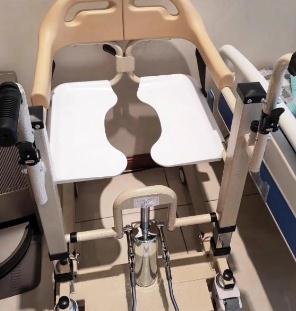
(4) Seating-type and transfer assistive devices
Suitable for short-distance transfers such as from sofa to wheelchair or bed to wheelchair.
Non-fixed type, more flexible, can be placed and used at home.
3.Which is better — ceiling lift or mobile lift?
If you are a long-term care, heavily dependent patient/user who requires frequent movement – a ceiling-mounted patient transfer unit is generally a more reliable, safer, and more patient-friendly solution.
If you are in a home environment with limited space/structure, require less demanding care, and need a flexible/economical solution – a mobile patient transfer unit is more convenient, less expensive, and better suited for flexible use.
4.How much weight can a patient lift system support?
Patient transfer systems typically have a load-bearing capacity between 150 and 250 kg, with high-strength models reaching 300 to 500 kg. This depends on the type of equipment and the application environment. When selecting equipment, it is essential to confirm the product's nominal load-bearing capacity, equipment strength, and the structural safety of the installation.