- Home
-
Lifting Column Selection Guide for Office Desks
Views: 0 Author: Site Editor Publish Time: 2023-12-15 Origin: Site


What is the Lifting Column?
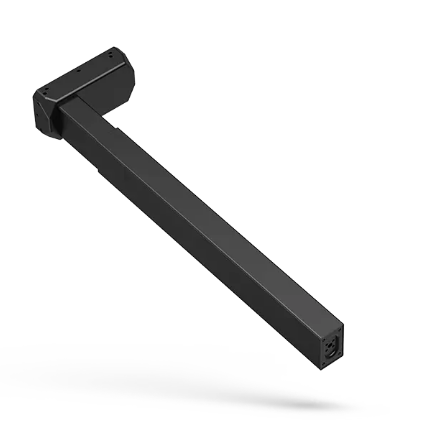
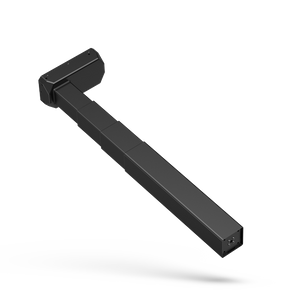
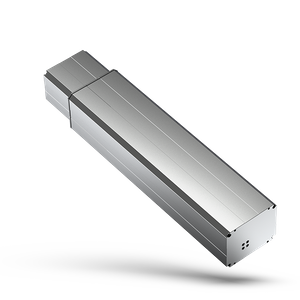
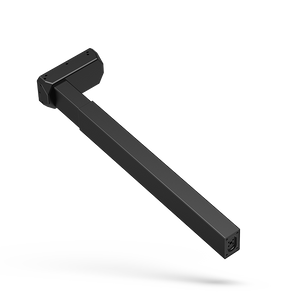
A lifting column is a mechanical or electromechanical device designed to provide vertical movement or height adjustment. They are widely used in standing desks and height adjustable desk frames, these motorized columns allow users to easily switch between sitting and standing positions.
As a key structural component of a standing desk frame, lifting column integrate motor drive systems with telescopic columns to provide precise vertical movement. Compared with traditional manual desks, electric systems offer better convenience, improved ergonomics, and enhanced productivity in both office and home environments.
What Does a Lifting Column Desk Include?
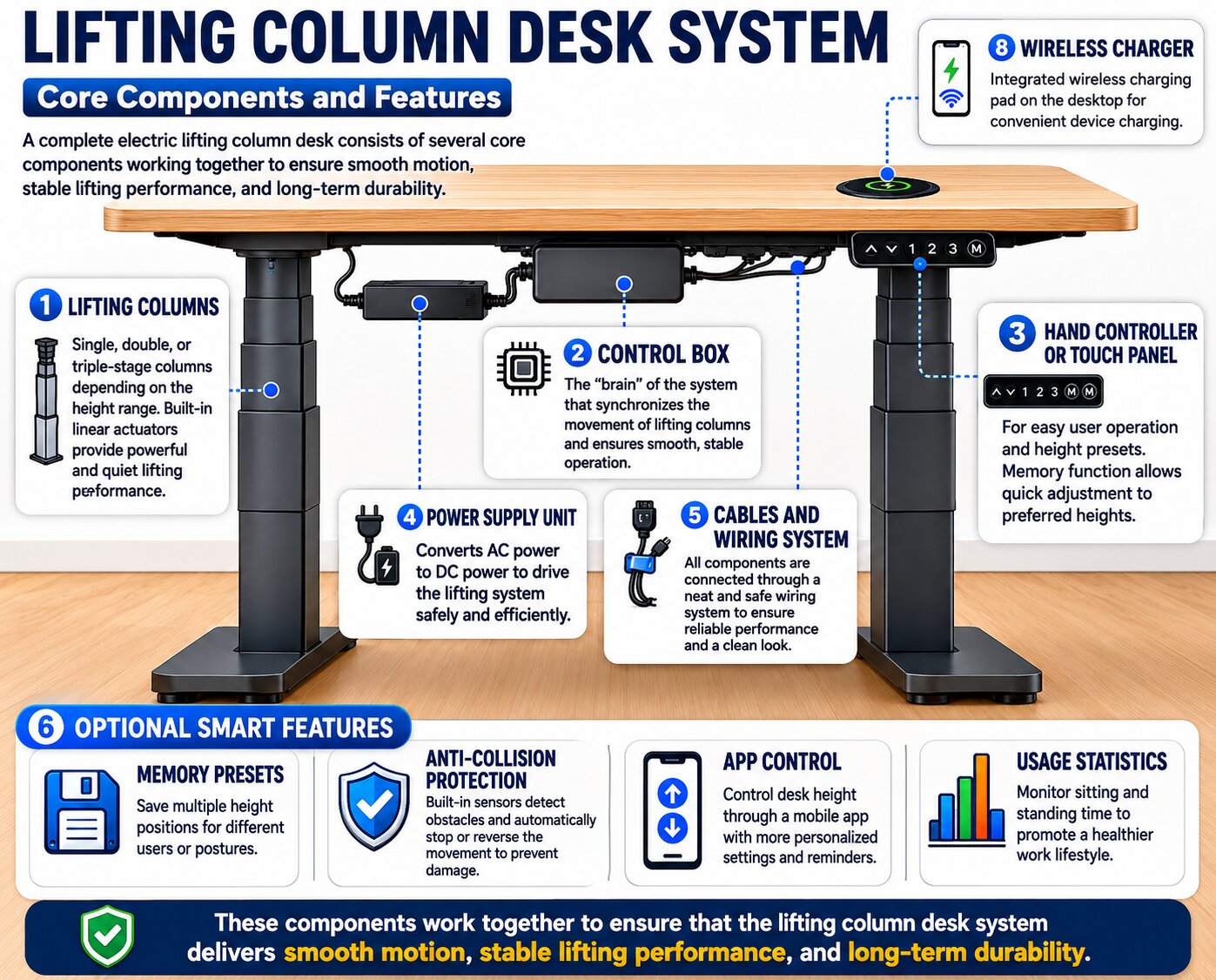
A complete electric lifting column desk typically consists of several core components working together:
Lifting column : single, double, or triple-stage columns depending on height range
Control box: the “brain” of the system that synchronizes movement
Hand controller or touch panel: for user operation and height presets
Power supply unit
Wireless charger
Cables and wiring system
Optional smart features such as memory presets, anti-collision protection, and app control
These components work together to ensure that the linear actuator system delivers smooth motion, stable lifting performance, and long-term durability.
Applications of Lifting Column in Desks
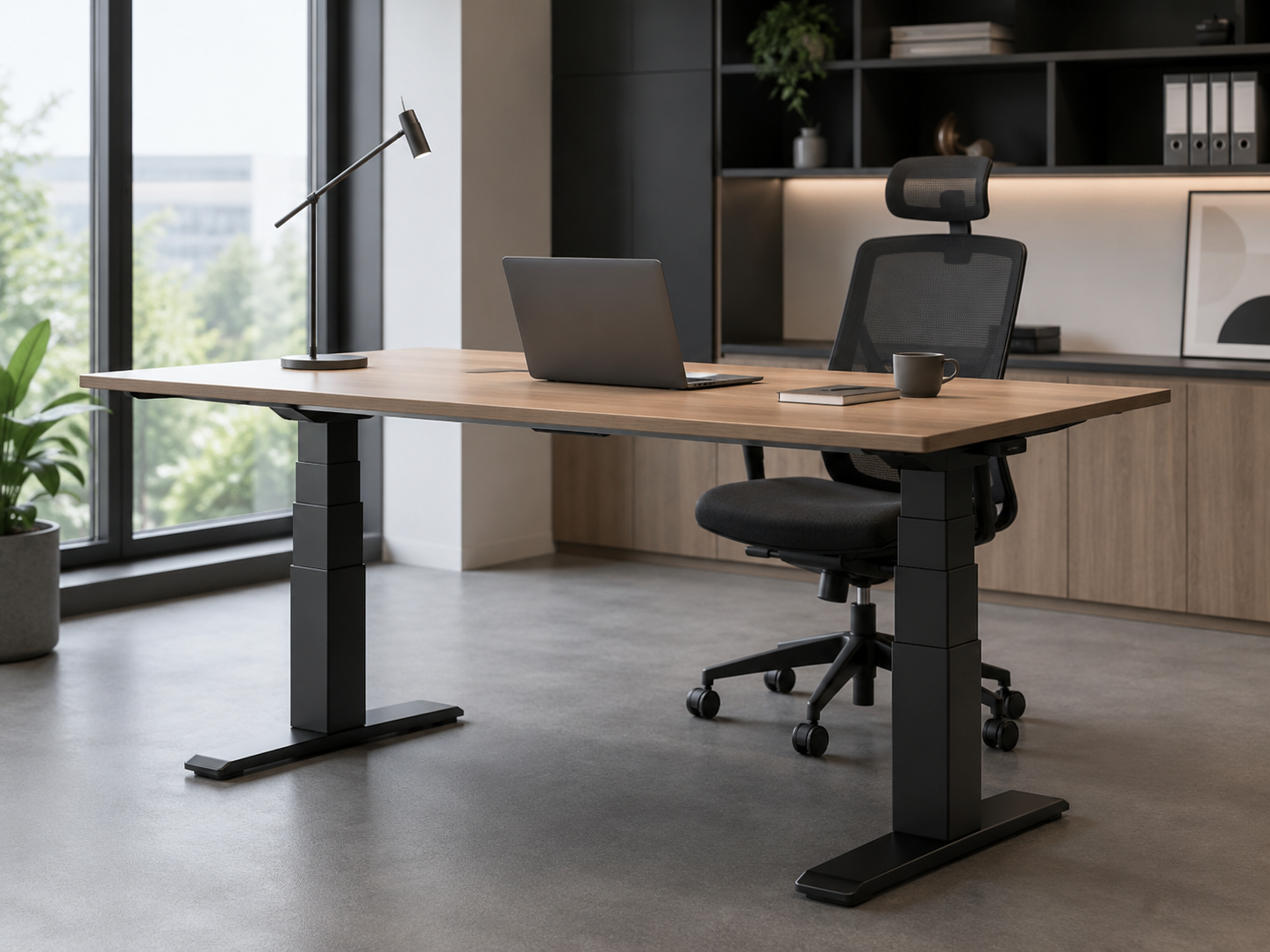
With the growing popularity of ergonomic office concepts, lifting columns have been widely used in various office desk products, providing users with a more flexible, healthier, and more comfortable working experience. Whether in corporate offices, home workspaces, or shared office environments, lifting columns play an important role.
Corporate Workstations
In modern corporate office environments, more and more companies are adopting electric standing desks to improve employee comfort and wellbeing. Lifting columns allow employees to freely adjust desk height according to their body size and working habits, making it easy to switch between sitting and standing positions. Prolonged sitting can lead to neck and lower back strain, while desks equipped with lifting columns help relieve physical fatigue, improve work efficiency, and increase employee satisfaction.
Home Office Spaces
The rise of remote work and home-based work has created higher demands for comfort and functionality in home office desks. Lifting columns enable home office desks to meet the needs of different family members. Whether for adult work, children’s study, or shared workspaces, users can easily adjust the desk to the proper height, creating a better overall experience.
Conference Tables and Collaborative Spaces
Lifting columns are also widely used in meeting rooms, training rooms, and team collaboration areas. Height-adjustable conference tables can be quickly adapted to different meeting formats, such as standing brainstorming sessions, product discussions, or training activities. Standing meetings can improve participant focus, shorten meeting time, and enhance communication efficiency.
Open-Plan Office Environments
Open-plan offices often need to balance flexibility with individual preferences. By integrating lifting columns into office desks, different employees can adjust desk height at any time according to their working posture, making ergonomic work more comfortable. At the same time, companies can enhance the modern look and functionality of their office environments with a unified standing desk solution.
Smart Office Applications
With the development of smart offices, lifting columns are no longer just simple lifting actuators; they have become an important part of intelligent office systems. Combined with controllers, sensors, and smart software, standing desks can offer height memory, sedentary reminders, health data tracking, and other features, creating a smarter and more efficient office experience.
Overall, the application of lifting columns in office desks has evolved from simple height adjustment to an important technological support for healthier work, better space utilization, and smarter office environments. As demand for ergonomic office solutions continues to grow among both companies and individuals, the future of lifting columns in office furniture looks even more promising.
Types of Lifting Column
By Drive Mechanism
1.Hydraulic Drive Lifting Column
Using hydraulic oil as the transmission medium, it is divided into integrated and split types, with strong power, stable lifting, fast response, excellent waterproof and cold resistance, suitable for high-security places.
2.Electric Drive Lifting Column
Powered by DC motors, divided into lead screw and ball screw drives, with simple structure, convenient installation and low cost, suitable for civil scenarios with limited budgets.
3.Pneumatic Drive Lifting Column
Driven by compressed air, environmentally friendly and low-noise, but cumbersome to construct, prone to air leakage, suitable for areas with high environmental protection requirements and low load demand.
4.Semi-automatic/Manual Lifting Column
Semi-automatic rely on power for lifting and manual force for lowering; the manual type is fully manual, no external power needed, suitable for temporary control and low-frequency use.
By Stage Design
1.1-stage Lifting Column
Only one fixed or single telescopic tube segment, simple structure, low cost, limited lifting stroke, suitable for scenarios with low height adjustment requirements.
2.2-stage Lifting Column
Two nested telescopic segments, balancing height adjustment range and stability, compact retracted length, suitable for scenarios requiring moderate stroke and compact storage.
3.3-stage Lifting Column
Three nested telescopic segments, good stroke-to-retracted length ratio, high flexibility and stability, suitable for scenarios requiring wide height adjustment range.
4.4-stage Lifting Column
Four nested telescopic segments, longest lifting stroke, complex structure and high cost, suitable for special scenarios requiring ultra-long stroke.
By Structure Design
1.Telescopic Lifting Column
Nested telescopic profiles with built-in actuators, freely retractable and compact, widely used in medical, office, industrial and security fields.
2.Fixed Lifting Column
Directly fixed to the ground, no movable functions, high stability and anti-collision performance, used for long-term isolation and protection.
3.Movable Lifting Column
Separated column and base, movable manually, flexible to use but weak anti-collision, suitable for temporary control scenarios.
4.Embedded Lifting Column
Embedded in the ground, flush with the ground when retracted, good landscape integration, suitable for high-end communities and airports with security and beauty needs
How to Choose a Lifting Column?
Selecting the right lifting column directly impacts your desk’s performance, durability and ergonomics. Below are the core factors to consider, including budget guidance:
Load Capacity: Calculate total weight (desktop + equipment) and add a 20-30% safety margin. Choose light-duty (50-80 kg) for basic setups, medium-duty (80-120 kg) for most offices, and heavy-duty (120+ kg) for multi-monitor/gaming rigs.
Drive Mechanism: Prioritize electric systems—ball screw drives (smoother, longer life) for frequent use, lead screw drives (more affordable) for occasional home use. Avoid hydraulic/pneumatic desks.
Noise Level: Look for ≤50 dB operation (quieter than conversation); premium models reach <45 dB for open offices.
Stage Design: 2-stage balances cost and performance; 3-stage offers longer stroke with compact retraction; 4-stage is rarely needed for standard desks.
Compatibility: Verify fit with your desk frame, desktop thickness (1.9-5.1 cm) and control system.
Smart Features: Essential: anti-collision protection; Recommended: memory presets; Optional: app control, wireless charging.
Price Budget (per column):
$100-$200: Budget-friendly for home/temporary use
$200-$350: Best value for most offices
$350+: Premium for corporate/executive setups
Recommended JIECANG Lifting Column Products for Office Desks
1. JS36DS1-2-S— for compact and standard office desks
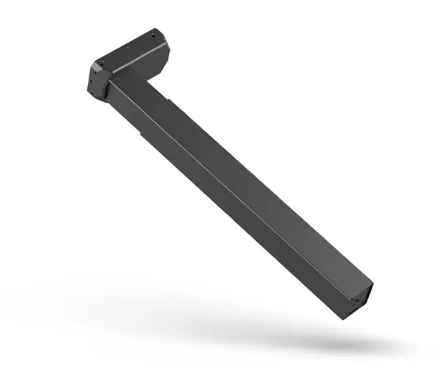
2 Stage
Application: Smart Office
Stroke : 500mm
This is a 2-stage rectangular no-hole column with a short installation dimension and a long stroke length, making it a practical choice for a wide range of desk applications. JIECANG also lists it under Smart Office, and it includes anti-collision protection, low-noise movement, and very low standby power consumption.
2. JS36DR3-3-S — for taller users and flexible workstations
3 Stage
Rectangular : 90*60 mm
Stroke : 650mm
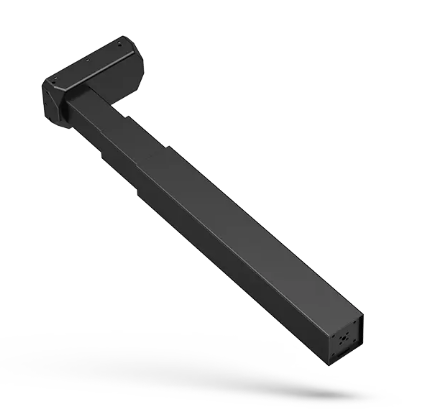
This 3-stage rectangular no-hole column offers a long stroke while keeping the installation dimension compact. It is suitable for many desk applications, has a compact motor housing that removes the need for an extra crossbar, and supports steady, quiet movement. In my view, this makes it a strong option for shared workstations and height-adjustable desks used by different people.3. JS36DC1-3-S — for modern office desks with a clean look
3 Stage
Round ∅70 mm
Stroke :650mm
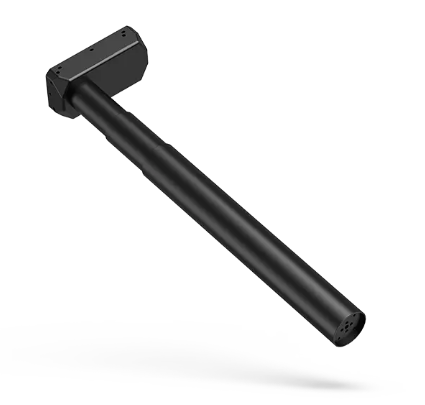
This round 3-segment no-hole column is described by JIECANG as suitable for a wide range of desk applications. It also supports anti-collision protection, low-noise operation, and a very low standby power consumption below 0.1W, which makes it a good fit for modern office furniture that needs both appearance and performance.4. JS36DS5-3-S — for premium office desks and mixed-use environments
3 Stage
Square 75*75 mm
Stroke: 650mm
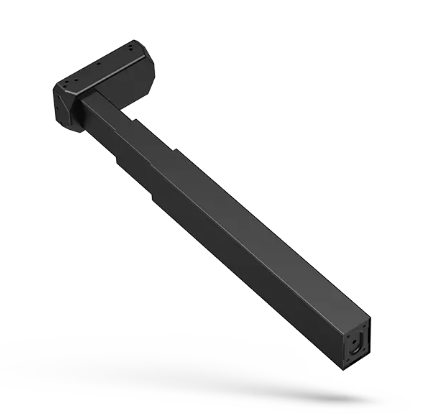
This square 3-stage no-hole column is described as suitable for applications ranging from industry to office desks. JIECANG highlights its compact shape, long stroke, multiple color options, compatibility with different frame and foot constructions, and quiet operation. That combination makes it a versatile choice for premium desks and more demanding office environments.5. JS36H5 — for space-saving or creative office layouts
Stroke:500mm
Inline Columns
Speed: 30mm/s
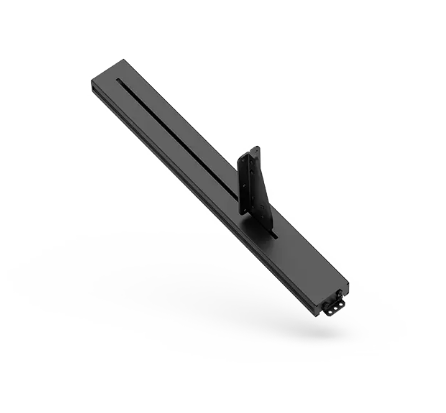
JS36H5 is a lifting column designed for innovative styling in office, home decoration, and commercial environments. It can be hidden in the wall to save space and includes anti-collision protection, so it is a good fit for compact office concepts or special design-driven desk projects.6. JS36DR1-2-S — for cost-effective office desk projects
2 Stage
Stroke : 500mm
L-shaped Columns
This is a rectangular 2-stage no-hole column that is a clean, compact, and cost-effective alternative for a broad range of desk applications. It also offers anti-collision protection, quiet movement, and compatibility with standard JIECANG control boxes, which makes it suitable for budget-conscious office desk builds.Conclusion
The lifting column is the foundation of a modern standing desk frame and height adjustable desk. By integrating motorized linear actuator technology with smart control systems, they enable flexible, ergonomic, and efficient workspaces.
Whether for home offices, corporate environments, or industrial workstations, choosing high-quality lifting columns ensures better performance, durability, and user experience.
Lifting Columns FAQ
1. What is the difference between a lifting column and a linear actuator?
A lifting column is a specialized type of linear actuator designed for vertical lifting applications like desks and workstations.2. Are electric lifting columns suitable for standing desk frames?
Yes, they are the core component of most modern standing desk frames and provide stable height adjustment.3. How much weight can lifting columns support?
Most systems can handle standard office equipment, while heavy-duty models support higher loads depending on design.4. Are lifting columns quiet during operation?
Yes, high-quality systems like JIECANG are designed for low-noise operation, making them ideal for office use.5. Can lifting columns be customized for desk projects?
Yes, many manufacturers offer customization options including stroke length, speed, load capacity, and control systems.