- Home
-
Single Motor VS. Dual Motor Standing Desks: A Complete Engineering & Sourcing Guide
Views: 0 Author: Site Editor Publish Time: 2026-03-22 Origin: Site


When evaluating ergonomic desk frames for your product line or corporate workspace, the lifting mechanism is the absolute core of the product. It directly dictates the desk's power, stability, aesthetic appeal, and overall user experience.
Key Takeaways:Single vs. Dual Motor Standing Desks at a Glance
Load Capacity & Power: Single-motor frames support up to 80 kg (176 lbs) for standard setups, while dual-motor frames handle heavy-duty loads up to 125 kg (276 lbs) for multi-monitor workstations.
Speed & Synchronization: Dual-motor systems adjust significantly faster (40 mm/s vs. 18 mm/s) and use advanced electronic controllers (like JIECANG's NH1/NH2) for ultra-smooth, wobble-free lifting, compared to the mechanical hex-rod sync of single motors.
Aesthetics & Footprint: Dual-motor designs eliminate the under-desk crossbar, offering a sleek, symmetrical, and modern architectural look. Single motors are more compact but feature a slightly traditional, asymmetrical drive structure.
Cost vs. Value: Single-motor desks are highly cost-effective for budget-conscious and home office projects. Dual-motor desks provide a superior cost-performance ratio for premium, commercial-grade furniture lines.
Manufacturing Reliability: Whether single or dual, sourcing from a vertically integrated manufacturer like JIECANG ensures your frames are rigorously tested in ISO/IEC 17025 CNAS-accredited "Witness Laboratories" to meet global compliance (CE, UL, BIS).
For B2B buyers, furniture brands, and distributors, the debate between single-motor and dual-motor standing desks comes down to balancing functional requirements with budget. This comprehensive guide breaks down the technical, structural, and aesthetic distinctions to help you make data-driven sourcing decisions.
Quick Look: Head-to-Head Performance Comparison
To understand which mechanism best suits your target market, let's look at the hard data. Below is a performance comparison based on standard testing parameters from JIECANG's advanced linear motion testing labs:
Technical Specifications
Single-Motor Desk Frame
Dual-Motor Desk Frame
Typical Market Load
~50 kg (110 lbs)
~100 kg (220 lbs)
JIECANG Max Load
80 kg (176 lbs)
125 kg (265 lbs)
Adjustment Speed
18 mm/s
40 mm/s
Lifting Stability
Reliable (Mechanical Sync)
Ultra-Smooth (Electronic Sync)
Control System
Integrated Control Box
Premium NH1/NH2 Controller
Best Application
Home office, light workstations
Heavy-duty, multi-monitor setups
Deep Dive: Core Functional & Technical Differences
1. Power Output & Load Capacity
The most immediate functional difference lies in raw lifting power.
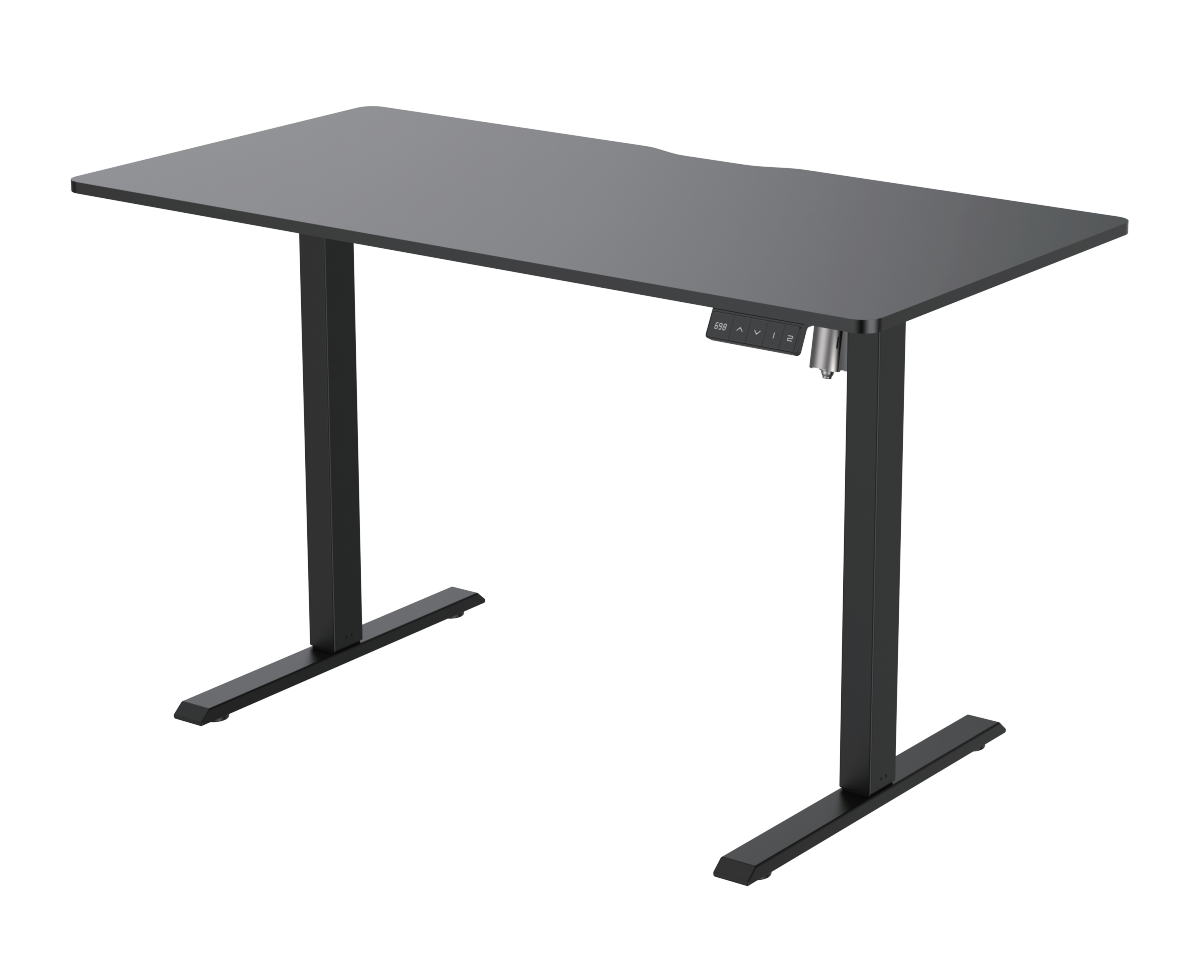
Primer6.1
Single-Motor Systems: Driven by one motor, power is distributed to both legs via a mechanical transmission structure. While the industry average hovers around 50 kg, JIECANG's optimized single-motor frames can comfortably support up to 80 kg (176 lbs). They are perfectly suited for lightweight tasks, holding a laptop, a single monitor, and basic accessories.
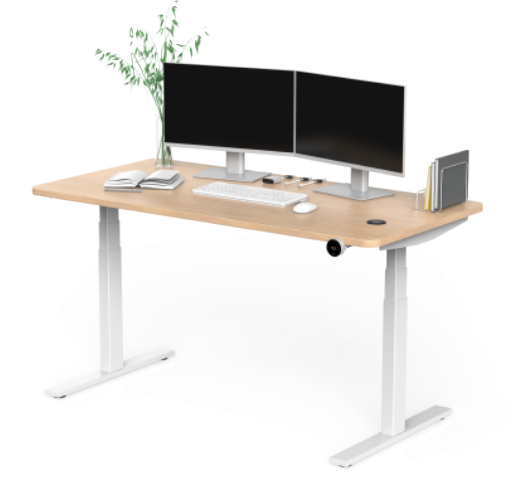
TS-CLASSIC™
Dual-Motor Systems: Featuring an independent drive motor housed inside each lifting column, the power output is significantly more robust. JIECANG's dual-motor frames elevate the load capacity to an impressive 125 kg (276 lbs). They are designed for heavy-duty environments, easily handling heavy desktops, multiple monitors, and extensive office equipment without straining the motors.
2. Lifting Stability & Synchronization
Single-Motor (Mechanical Sync): Because synchronization relies on a physical transmission hex rod, there can be slight mechanical tolerance. While perfectly fine for light loads, the frame might exhibit minor jitters or vibrations when adjusting under near-maximum capacity.
Dual-Motor (Electronic Sync): Independent motors rely on a highly sophisticated electronic control system rather than a physical shaft. Paired with JIECANG’s advanced NH1/NH2 controllers featuring Soft Start/Stop technology, the synchronization is flawless. This ensures a remarkably smooth, wobble-free transition even under maximum load.
3. Adjustment Speed & Efficiency
In a fast-paced work environment, dual-motor systems outpace their single-motor counterparts. Equipped with premium controllers, JIECANG dual-motor frames achieve a swift adjustment speed of 40 mm/s, compared to the steady 18 mm/s of single-motor systems. For users who frequently transition between sitting and standing, the dual-motor setup offers a highly efficient and premium feel.
4. Acoustic Experience (Noise Control)
Single-Motor: The presence of a mechanical transmission rod rotating during adjustment can generate slightly more friction noise.
Dual-Motor: By eliminating the central transmission shaft and utilizing independent, high-quality motors completely enclosed within the columns, the lifting experience is incredibly quiet and fluid. JIECANG engineers both systems to operate at under 48 decibels, ensuring a distraction-free office environment.
Architectural Design & Visual Aesthetics
Beyond internal performance, the choice between single and dual motors significantly impacts the under-desk architecture—a crucial factor for product designers and brand positioning.
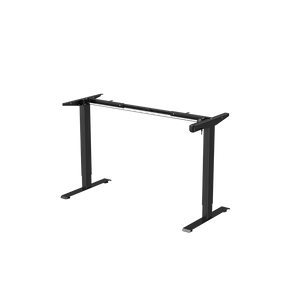
Drive Structure & Symmetry: Single-motor frames use a horizontal crossbar to mechanically sync the legs, with the motor mounted asymmetrically on one side. This can create a slightly traditional, mechanical look. Dual-motor frames conceal an independent motor inside each column, completely eliminating the crossbar. This results in a perfectly symmetrical, clean, and highly modern aesthetic.
Design Flexibility: Without the constraints of a mechanical shaft, dual-motor systems offer greater architectural freedom. The desk legs can be styled to look sleeker and more adaptable to various high-end design requirements.
Frame Footprint: Visually, single-motor frames are designed to be compact, making them proportionate and ideal for smaller, space-saving desktop surfaces. Dual-motor frames often feature a more expansive stance, looking visually grounded and grand enough to complement wide executive desktops.
Price vs. Value: Which Should You Choose?
Choose Single-Motor Frames (High Affordability) if:
You are targeting the budget-conscious consumer market, home office users, or entry-level e-commerce retail.
Your project involves large-scale corporate procurement where workstations only require lightweight setups.
Choose Dual-Motor Frames (High Cost-Performance Ratio) if:
You are positioning your brand in the premium ergonomic furniture tier.
You are supplying to clients who require heavy-duty performance, faster speeds, and a flawless, high-end user experience. While the initial investment is slightly higher, the functional value and durability it brings make it highly cost-effective.
The JIECANG Edge: World-Class Testing & Compliance
Sourcing the right desk frame is about supply chain reliability and risk mitigation. What truly separates JIECANG from standard OEM manufacturers is our uncompromising commitment to quality control.
Our In-House Testing Center operates under the ISO/IEC 17025 system and is fully CNAS accredited. More importantly, our facility serves as an official "Witness Laboratory" for globally recognized third-party agencies, including TÜV Rheinland, TÜV SÜD, SGS, and UL (ITS-CTF2). This means our testing environments and protocols are so rigorous that these international certifiers directly recognize our laboratory data. Every frame undergoes brutal cycle testing right here in our labs, guaranteeing exceptional durability, drastically lowering your RMA rates, and significantly shortening the certification cycle for your final products.
Whether you need standard CE/UL compliance or specific regional certifications like BIS for the Indian market, JIECANG provides unparalleled global distribution readiness.
Ready to upgrade your ergonomic product line?
Contact JIECANG's engineering and sales team today to request technical drawings, discuss custom specifications, or order a sample.
JIECANG Single Motor: https://www.jiecang.com/product/primer6.1.html
JIECANG Dual Motor: https://www.jiecang.com/product/ts-classic.html
[Standing Desks Frames] https://www.jiecang.com/product/standing-desk-systems.html
[Contact] https://www.jiecang.com/contactus.html