- Home
-
Engineering the Future of Humanoid Robots: JIECANG "Full-Domain" Lightweight Joint Solutions
Views: 0 Author: Site Editor Publish Time: 2026-09-18 Origin: Site


As robotic joints shrink, reducing weight is no longer just about using less material—it requires a complete rebalancing of transmission, thermal management, and precision. Discover how Jiecang Linear Motion is redefining rotary actuators.
The Paradigm Shift: From "Speed Reducers" to "Integrated Joint Units"
The traditional approach to robotic rotary joints—simply combining a motor with a speed reducer—is becoming obsolete for advanced humanoid robotics. When motors, gearings, encoders, communication interfaces, and brakes are packed into a confined space, metrics like weight, torque, rigidity, heat dissipation, and reliability become an intertwined system.
At the recent 2nd Humanoid Robot Joint Module Innovation Forum, Miaojiang Ding, Co-General Manager and Senior Engineer at JIECANG’s Robot Actuator Business Center, introduced our "Full-Domain Lightweight" philosophy. The core message? True technological advancement lies in optimizing these elements within a single, cohesive design framework.
JIECANG's product matrix encompasses harmonic, planetary, and cycloidal rotary modules, integrated with CAN, CAN FD, RS485, and EtherCAT interfaces. These are not merely different tiers of products; they are engineered solutions for distinct engineering challenges.
1. Structural Innovation: The Double-Steel-Wheel Harmonic Drive
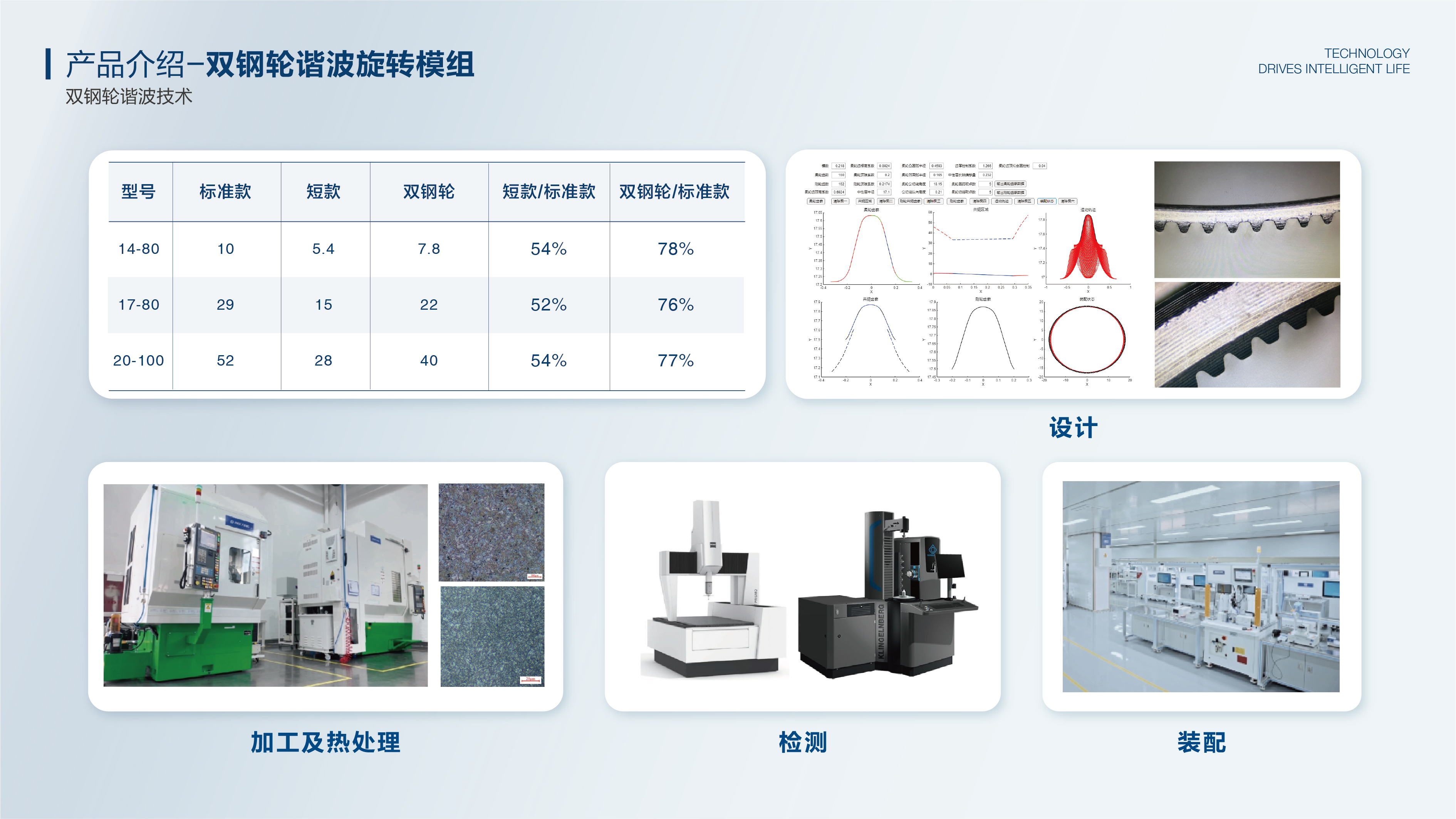
Harmonic drives excel in high reduction ratios and precision. However, as joints miniaturize, reducing the structural size often compromises load capacity. Jiecang’s answer is the Double-Steel-Wheel Harmonic Technology.
Available in 14-80, 17-80, and 20-100 specifications, this design shortens the axial length while maintaining 76% to 78% of standard torque capabilities. The secret isn't just removing metal—it's optimizing load paths, tooth profiles, and assembly precision.
JCHM50: Rated torque 10N·m (Peak 30N·m), weighing only 0.41–0.5kg.
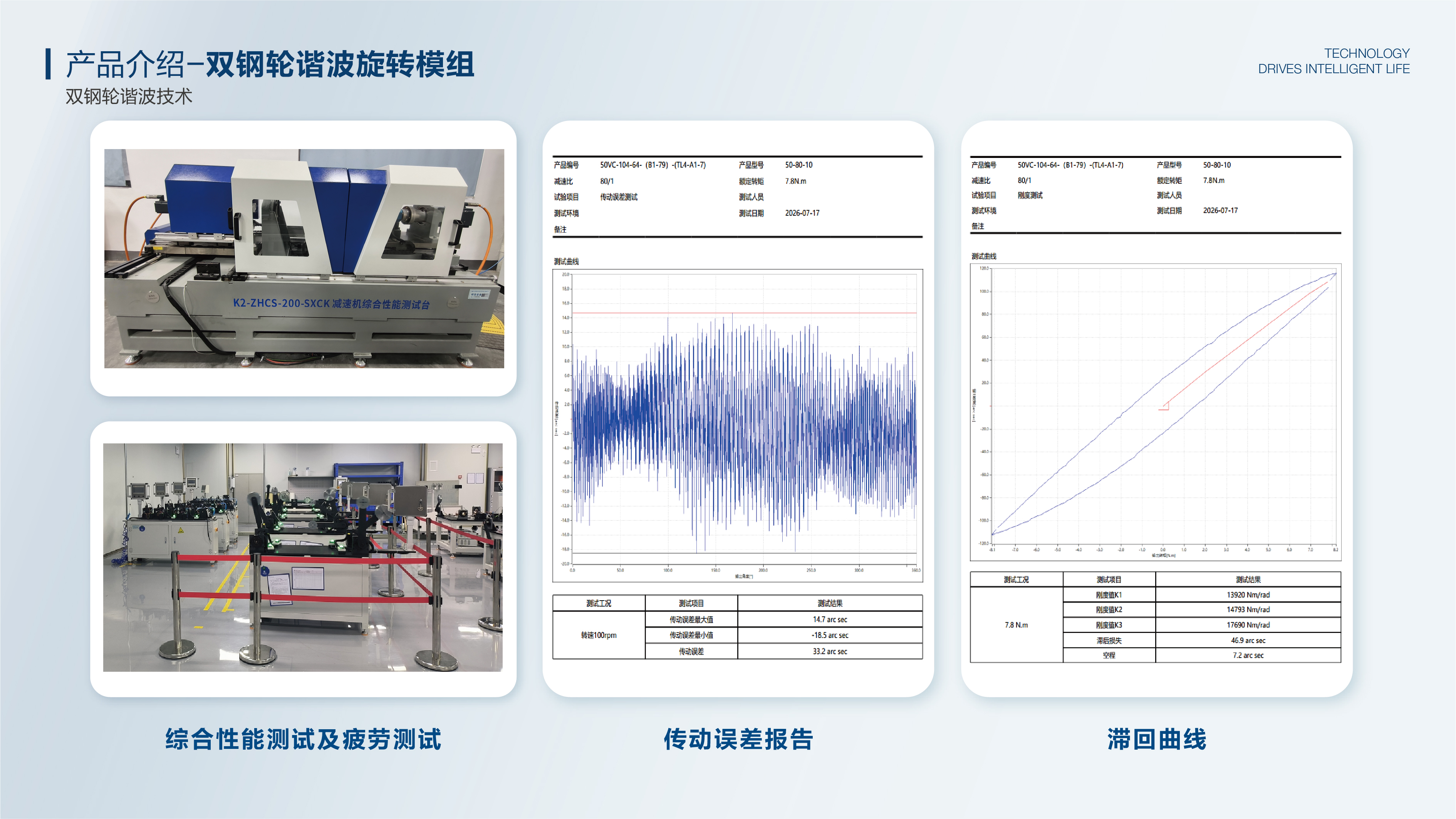
JCHM70: Rated torque 60N·m, weighing ~1kg, with an output repeatability of ±10 arc seconds.
2. Pushing the Limits with Advanced Materials
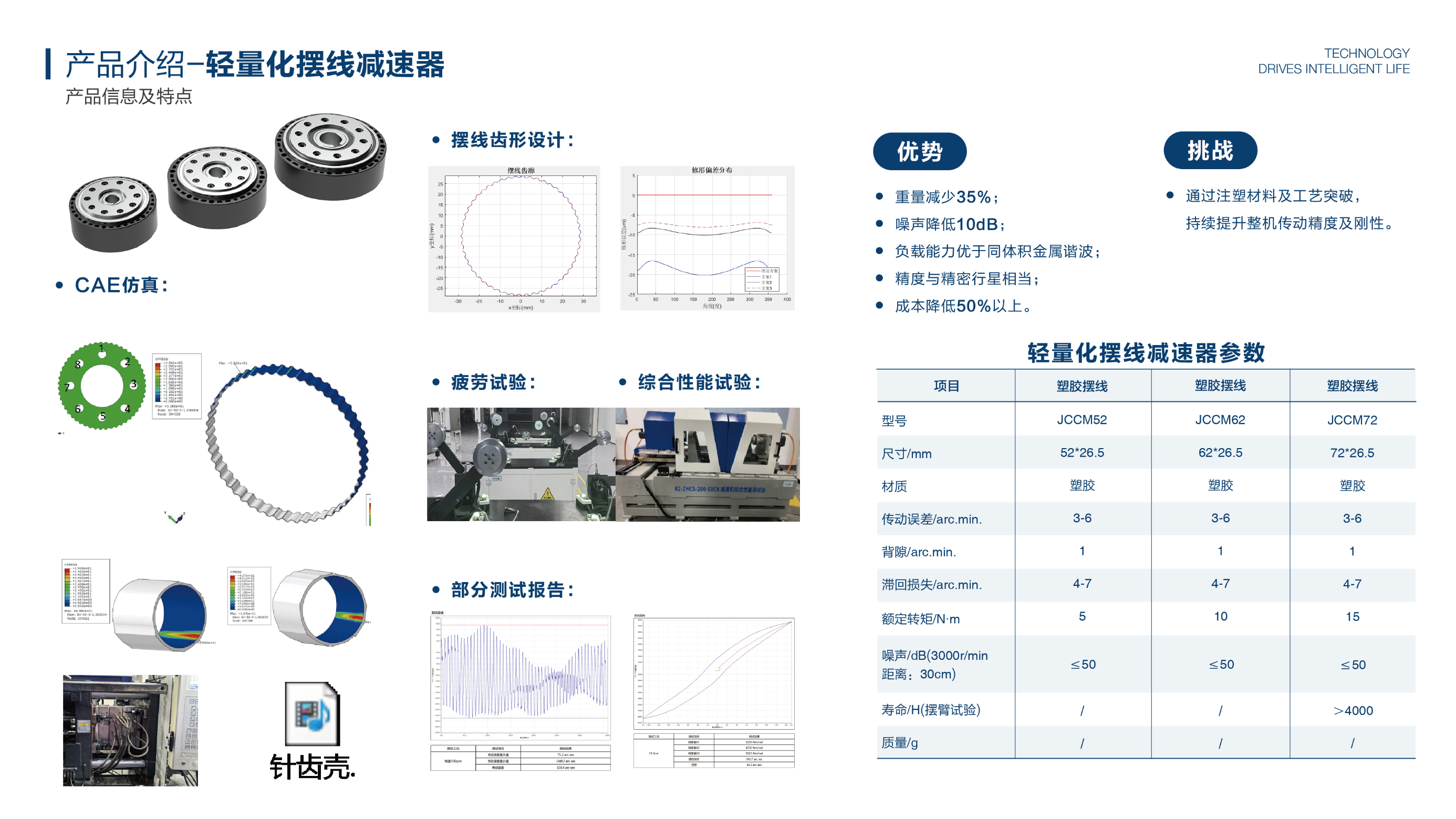
If structural redesign squeezes out excess weight, advanced materials push the physical limits. Jiecang’s lightweight harmonic solutions aim for a 30% weight reduction. Furthermore, our new material cycloidal modules (JCBM series) achieve a 35% weight reduction and a 10dB drop in noise.
Replacing metal with advanced polymers isn't a simple swap. It requires a complete redesign of the tooth profile, structural integrity, and injection molding processes to account for different stiffness and thermal expansion rates. The JCBM series (Φ52, Φ62, Φ72)—with the JCBM52 delivering 5N·m at just 0.38kg—proves that cycloidal drives offer a completely new balance of size, weight, and torque.
3. The Thermal Challenge: Liquid-Cooled Actuators
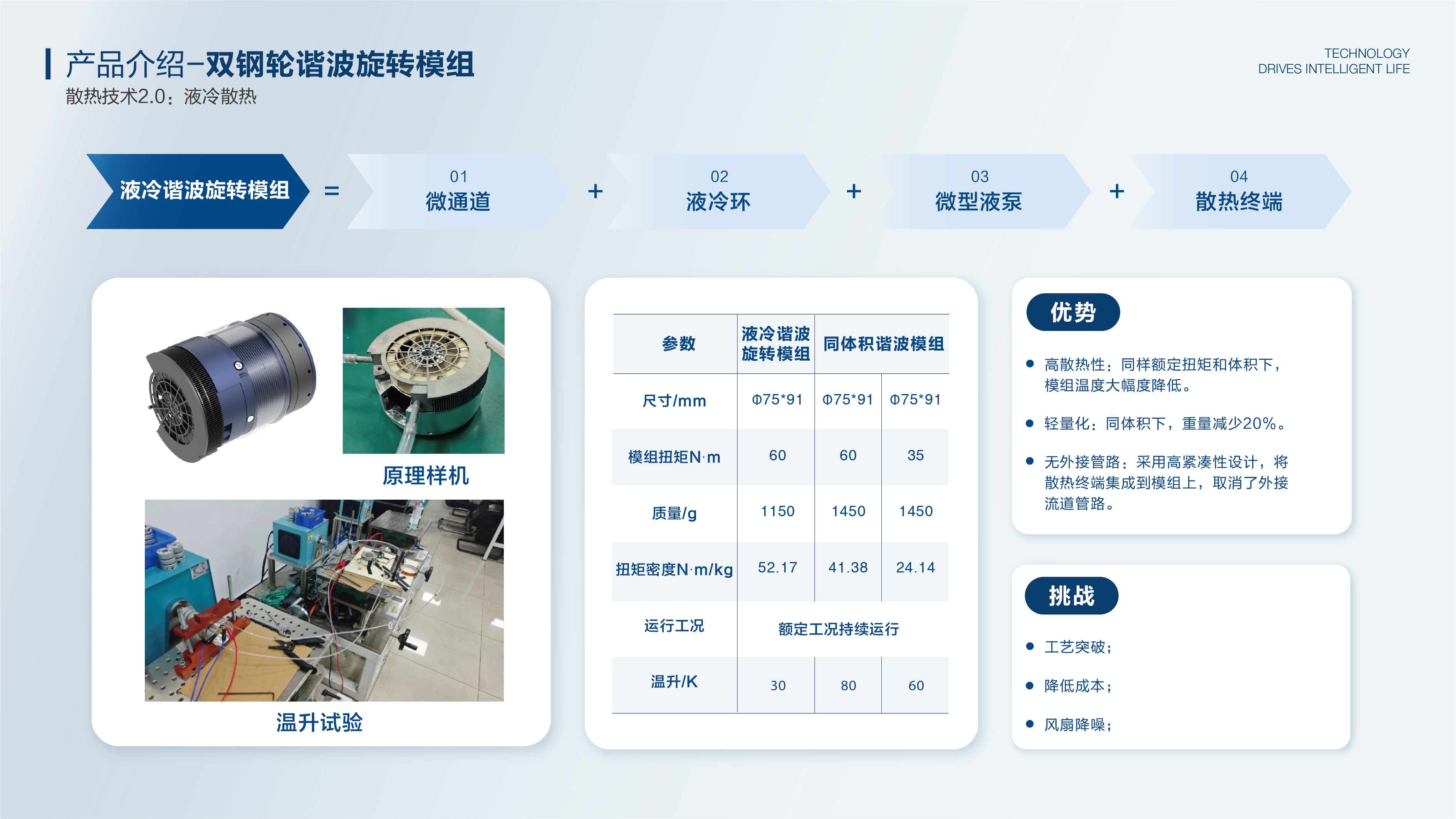
As modules get smaller, power density skyrockets. Heat management can no longer be an afterthought. JIECANG’s newly showcased liquid-cooled harmonic rotary module integrates micro-channels, liquid-cooling rings, and micro-pumps directly into the actuator's structure. By optimizing thermal conduction paths and airflow, we ensure that higher power density doesn't compromise long-term stability.
The Meaning of Lightweighting
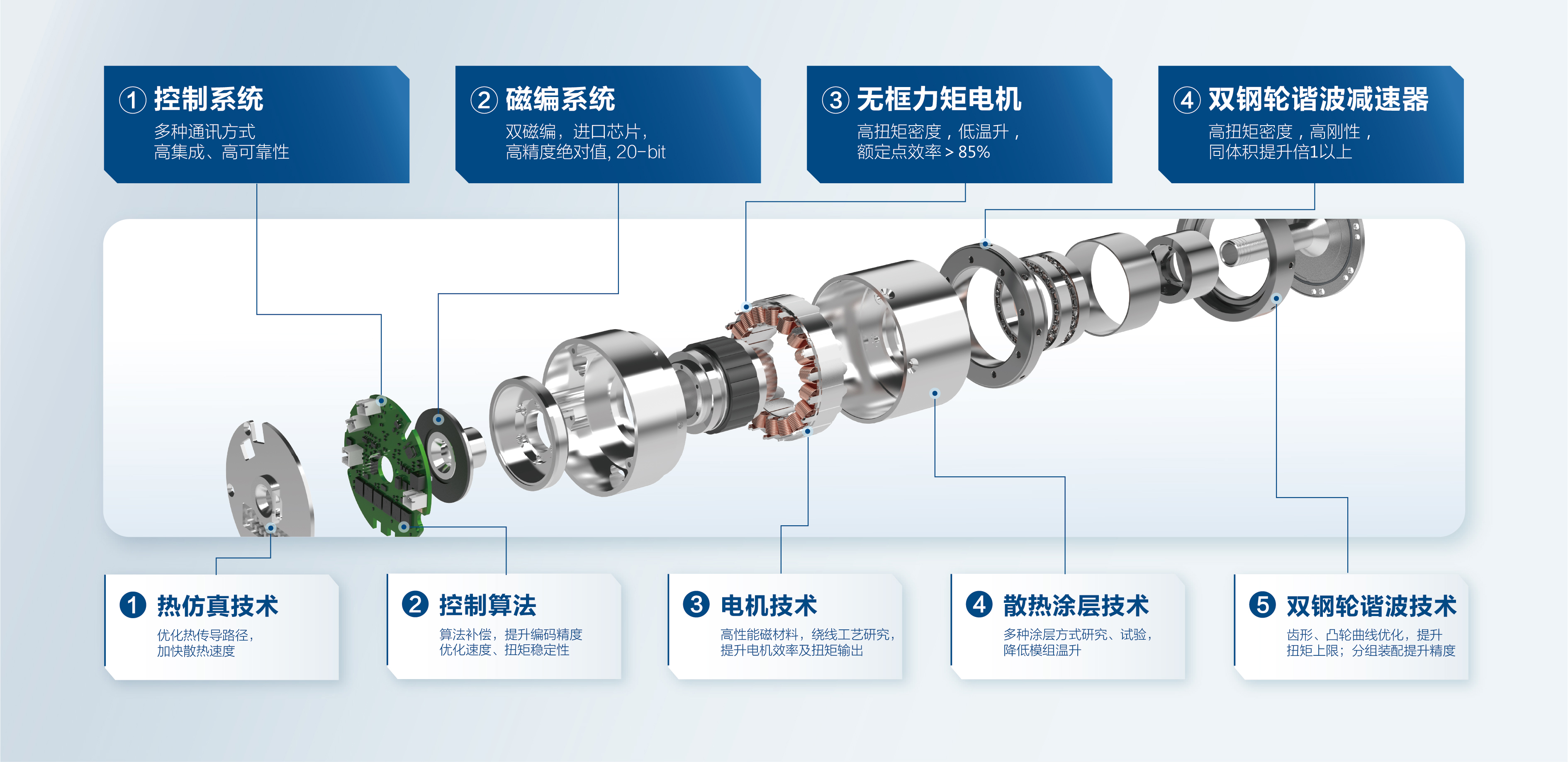
The ultimate goal of lightweighting isn't just achieving a smaller number on a scale. It’s about maintaining uncompromising torque, pinpoint precision, and thermal stability in a more compact form. This multi-path strategy is exactly how JIECANG is powering the next generation of robotics.